Morocco is one of those countries where food isn’t just something you eat — it’s part of the welcome. Across my visits to Marrakesh, Fes and Rabat, I’ve come to realise that Moroccan cuisine has its own rhythm: generous, fragrant, unhurried, and always offered with a level of hospitality that stays with you long after the trip ends.
After three visits, I’ve become a genuine fan of the food here — not just the big, iconic dishes, but the small rituals too: the breakfasts that stretch out gently, the mint tea poured with intention, the pastries that appear without fuss, the way bread is treated almost like a language of its own.
In this guide, I’m sharing the best Moroccan foods to try, drawn from my own experiences across these three cities that capture something essential about this warm and welcoming country.
Moroccan Breakfasts
If there’s one food ritual that instantly transports me back to Morocco, it’s breakfast. Across my visits, these mornings have become one of the things I look forward to most — generous, unhurried, and always served with that unmistakable Moroccan warmth.
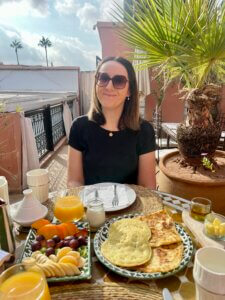
A typical Moroccan breakfast is a spread rather than a single dish:
- Msemen — flaky, buttery square pancakes
- Baghrir — soft “thousand‑hole” pancakes that soak up honey beautifully
- Fresh bread in endless varieties
- Honey, jam, olives, yoghurt, fruit
- And often a bowl of amlou, that silky almond‑sesame‑argan spread that feels like morning indulgence in its purest form
There’s mint tea, of course, poured with intention, and usually fresh orange juice. But what makes these breakfasts special isn’t just the food, it’s the pace. You sit in a courtyard or on a rooftop and there’s no expectation to rush. It’s a moment of calm before the sensory intensity of the medina.
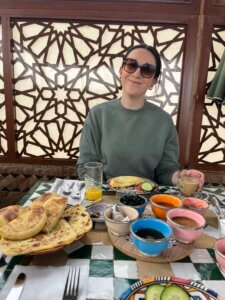
After three trips, I’ve come to see Moroccan breakfasts as one of the country’s great pleasures: abundant, comforting, and a reminder that the day can begin gently.
Mint Tea & Moroccan Pastries
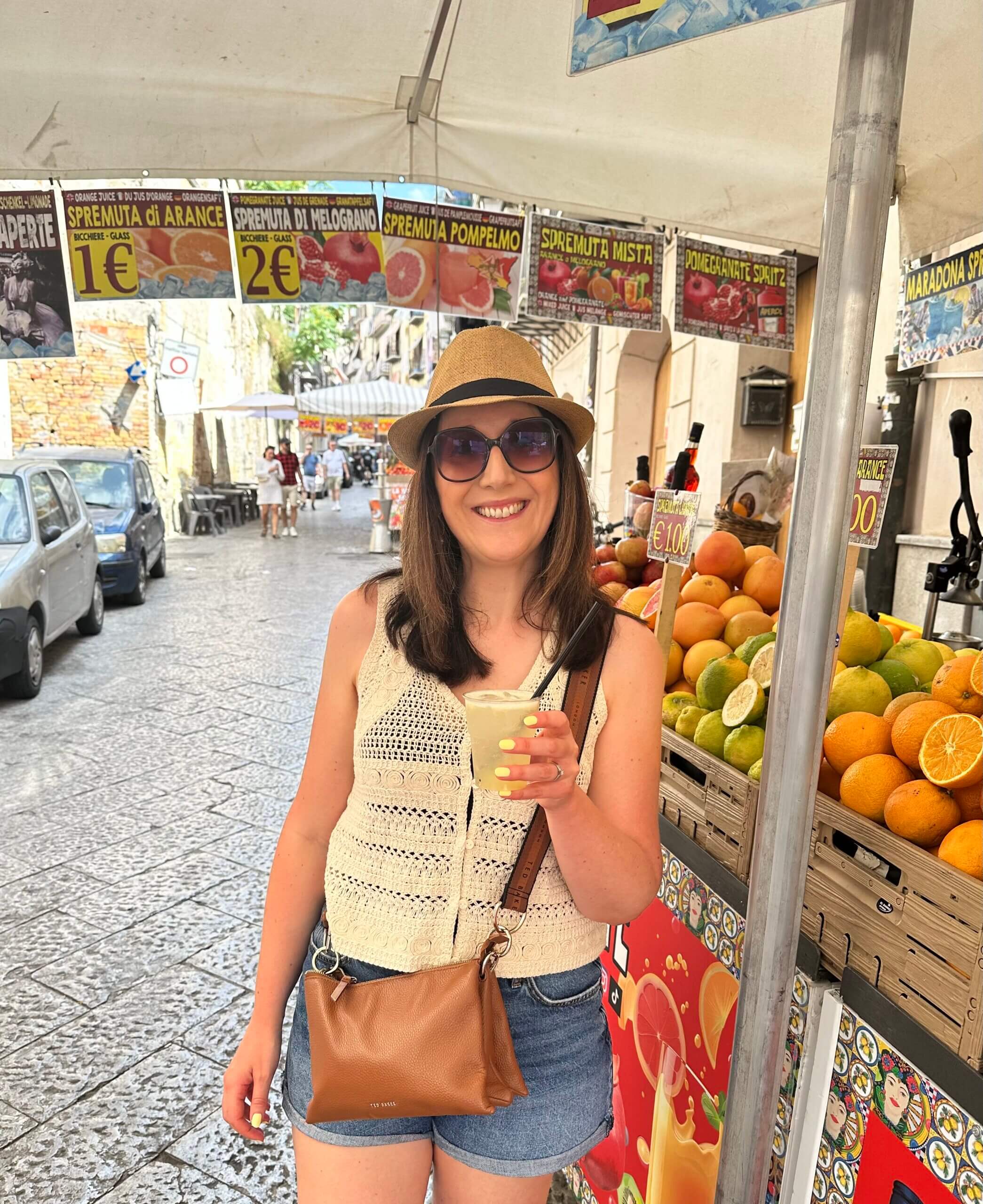
If Moroccan breakfasts are the slow, grounding start to the day, then mint tea with pastries is the country’s afternoon ritual. It’s such a small thing, yet it becomes one of the defining pleasures of a trip here.
Mint tea in Morocco is an unmistakable gesture of welcome. The pot arrives hot and the pour is unhurried and deliberate. Alongside it, you’ll often get a plate of pastries: almond crescents, honey‑coated spirals, sesame biscuits, or the soft, buttery cookies that seem to melt the moment you bite into them.
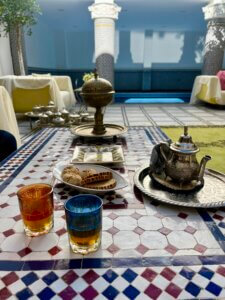
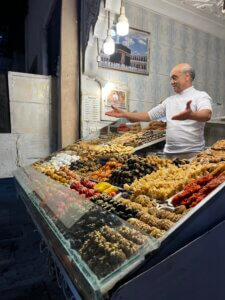
One of the joys of this ritual is that you can take it home with you. In the medinas,, you’ll find pastry sellers with towering displays of sweets — including the famous one near the spice square in Marrakesh, where the colours and textures make for an irresistible photo. They’ll happily box up a selection for you to bring back, and the pastries travel well in your hand luggage.
Tagines
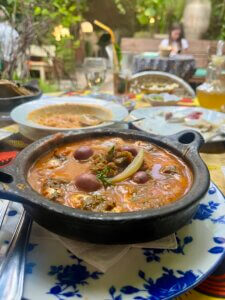
If there’s one dish that captures the soul of Moroccan cooking, it’s the tagine. Named after the conical clay pot it’s cooked in, a tagine is less a single recipe and more a whole philosophy of food: slow, fragrant, tender, and built around the idea that good things take time.
You’ll find endless variations — lamb with prunes, chicken with preserved lemon and olives, vegetable tagines scented with saffron, or the herb‑packed sardine tagines that feel bright and coastal. What they all share is that deep, layered flavour that only comes from long, gentle cooking.
A tagine isn’t flashy. It’s not trying to impress you. It’s the kind of dish that arrives at the table still bubbling, the lid lifted with a little flourish, releasing a cloud of steam that smells like warmth and spice and comfort. It’s food that invites you to slow down, tear off some bread, and settle in.
Loubia (Moroccan Bean Stew)
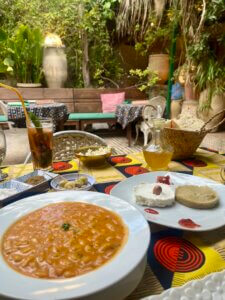
Loubia — the slow‑cooked white bean stew you’ll find bubbling away in cafés, market stalls and family kitchens — is one of the quiet stars of Moroccan food. It’s often served as a starter, ladled into small bowls with a side of bread, and it’s the kind of dish that feels both nourishing and deeply local.
The stew is usually made with white beans simmered in a tomato‑based broth, seasoned with garlic, paprika, cumin, and sometimes a hint of chilli. It’s simple, inexpensive, and absolutely delicious — the sort of everyday comfort food that tells you far more about a country’s culinary heart than its showpiece dishes.
Harira
Harira is one of those dishes that quietly wins everyone over. On the surface, it looks like a simple tomato soup, often served in small bowls from busy street‑food stalls in Jemaa el‑Fnaa square in Marrakesh. But once you taste it, you realise it’s much more than that.
The base is tomato, but it’s thickened and enriched with lentils, chickpeas, herbs, and sometimes a little pasta or rice, then gently spiced with warming flavours like ginger, pepper and cinnamon. The result is a soup that’s both bright and comforting — tangy from the tomato, but with enough depth to feel genuinely satisfying.
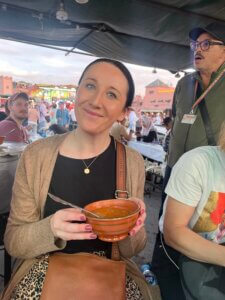
Harira is traditionally eaten to break the fast during Ramadan, often with dates and chebakia (sesame‑honey pastries), but you’ll also find it throughout the year. On food tours in Marrakesh, it’s often one of the most memorable stops: you stand at a stall, bowl in hand, watching the square flicker with lights and smoke, and suddenly this humble soup feels like exactly the right thing to be eating.
Olives & their many dressings
One of the first things you notice wandering through a Moroccan medina is the sheer abundance of olives. Stall after stall displays huge mounds of them — glossy greens, deep purples, tiny wrinkled blacks — each one marinated in its own blend of spices, herbs or citrus. It’s impossible to walk past without stopping.
Moroccan olives aren’t just a side dish; they’re a whole flavour universe. You’ll find:
- Lemon‑marinated green olives with preserved lemon and garlic
- Spicy harissa olives with chilli, paprika and cumin
- Herb‑marinated olives with parsley, coriander and olive oil
- Black olives cured until rich and almost smoky
- Citrus‑spiked olives with orange peel or fresh lemon zest
They’re served everywhere — as a starter in restaurants, alongside tagines, or simply as a snack with bread. And because each vendor has their own recipe, you can taste your way through the medina and never have the same flavour twice.
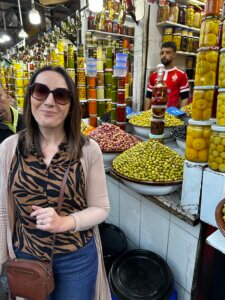
There’s something wonderfully grounding about this part of Moroccan food culture. Olives are everyday food, but they’re treated with care: marinated slowly, seasoned thoughtfully, and sold with pride. It’s a reminder that simple things can be elevated through attention and tradition.
Freshly Squeezed Juices
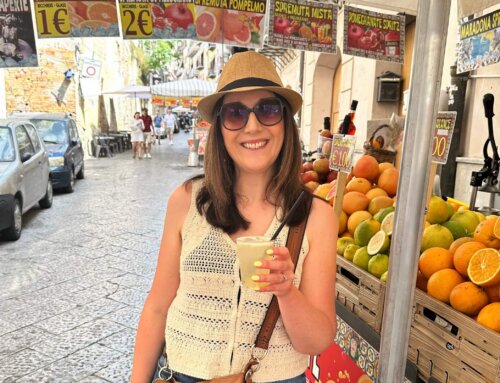
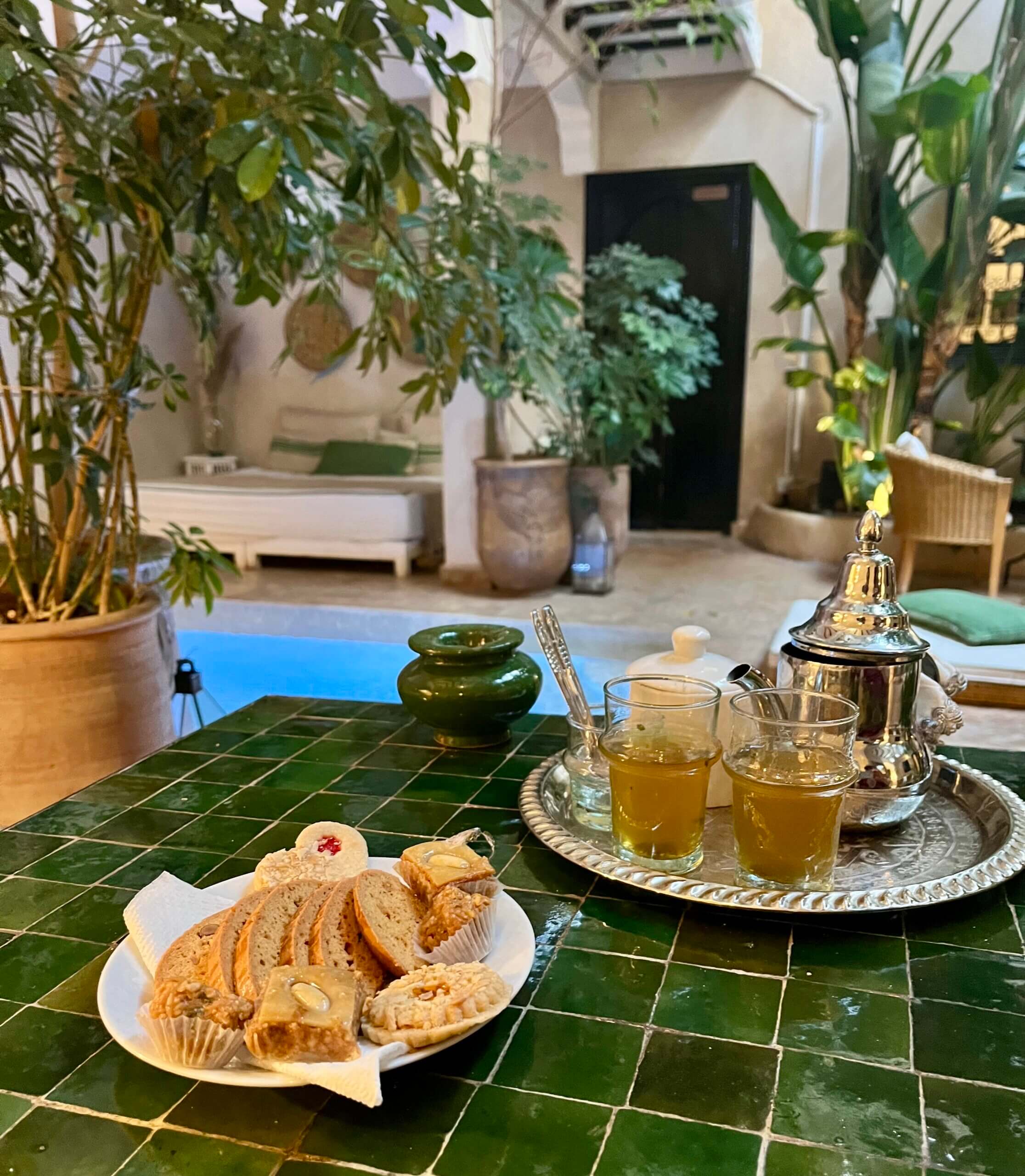
Juice stalls are everywhere in Morocco — pyramids of fruit stacked high, vendors squeezing glasses to order. Orange juice is the year‑round staple: sweet, bright, and perfect in the afternoon heat.
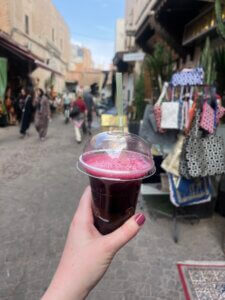
If you visit in autumn, you get something special: fresh pomegranate juice. The fruit is cracked open on the spot, the seeds pressed into a ruby‑red glass that’s tart, sweet and unforgettable.
Final Thoughts
After three trips to Morocco, what stays with me isn’t just the individual dishes but the way food is served here. Meals aren’t rushed. Rituals matter. There’s always time for tea, for bread, for something sweet, for a moment of pause.
Whether you’re sitting on a rooftop with a slow breakfast, stopping for mint tea and pastries in the afternoon, tasting olives in the medina, or sipping fresh juice between wanderings, Moroccan food has a way of grounding you in the present. It’s generous, unfussy, and offered with welcoming hospitality.
For more on travelling in this beautiful country, see our Morocco travel section