This article contains affiliate links. This means this blog will earn a small commission if you book through any of the included links, at no cost to you.
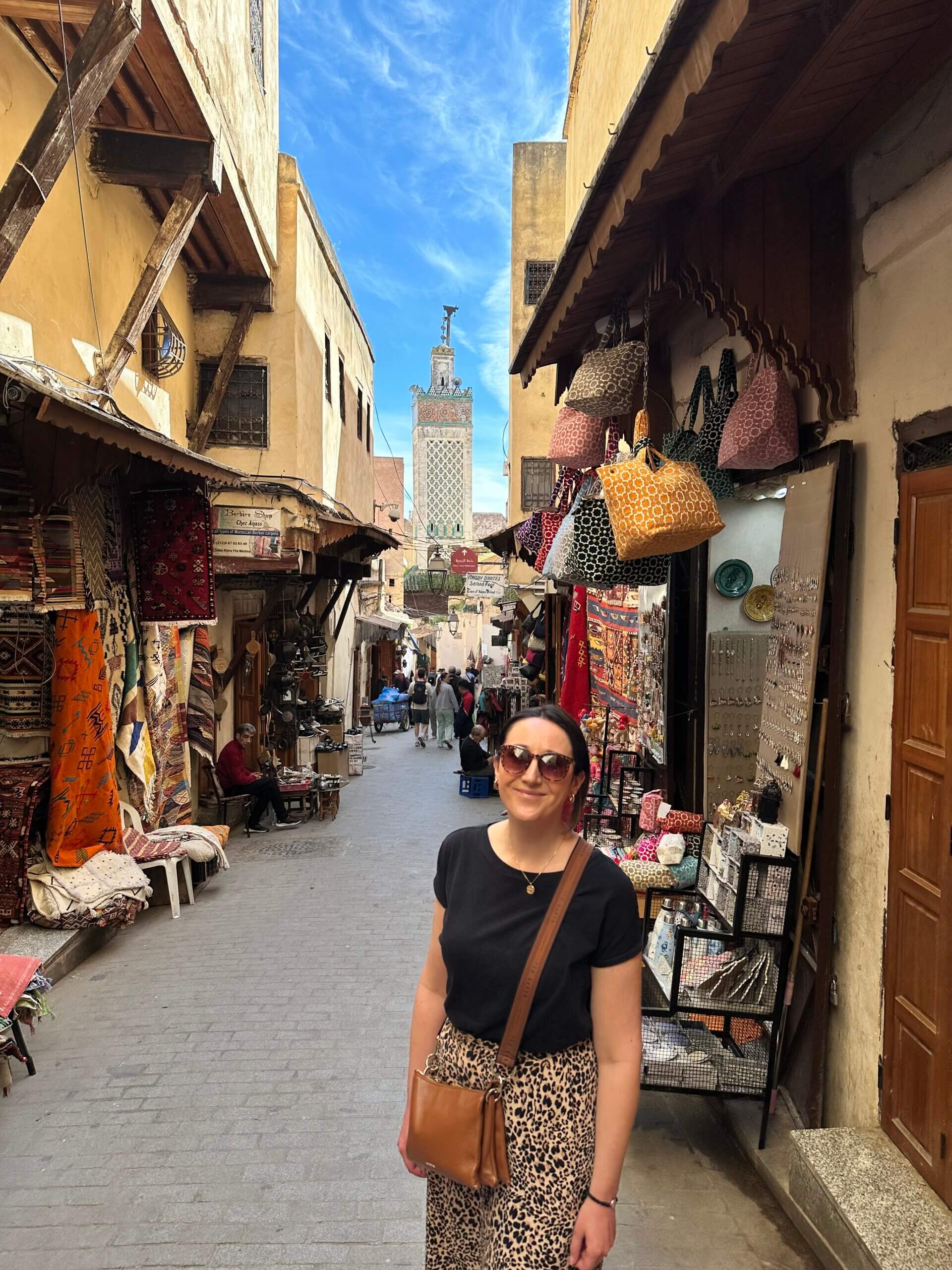
Fes is one of Morocco’s four imperial cities, along with Marrakesh, Meknes and Rabat. The city is home to the largest medina in the country; a vast, living labyrinth where daily life unfolds in narrow lanes, small workshops, and hidden courtyards. It’s busy, yes, but not in a way that overwhelms. Instead, the sights, sounds, and gentle sensory richness felt very restorative.
What struck me most was how easy it was to feel present there. The call to prayer echoing across the rooftops, the rhythm of artisans at work, the scent of spices and orange blossom drifting through the air — these small details naturally anchor your attention. It felt like a chilled and restorative break rather than a jam packed sight-seeing mission. It was also great place to enjoy some delicious Moroccan food and the rituaks that go along with this.
This guide brings together the my recommendations for a restorative city break in this welcoming city.
Things to do in Fes
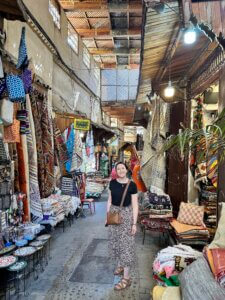
Exploring & shopping in the medina
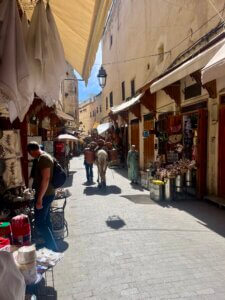
Fes’ medina — the largest and oldest in Morocco — is an experience in itself. It’s a UNESCO World Heritage site, a true living city-within-a-city, and wandering it is one of the most restorative things you can do here. There’s no single “route” to follow; the joy is in letting yourself drift.
What we loved most was the simple act of walking with no agenda. The medina is vast, but it doesn’t feel chaotic once you settle into its rhythm. You move from quiet residential lanes to stretches filled with leather goods, ceramics, textiles, and tiny workshops where artisans still work by hand. Noticing everything around you can be super restorative and it’s one of my favourite things to do.
If you’re shopping, the medina is full of beautiful, practical things: handwoven rugs, brassware, pottery from nearby towns, leather slippers, natural beauty products. But it’s equally valid to treat it as a place to explore rather than acquire. The experience itself is the point.
The key sights in Fes
Fes has a handful of well‑known landmarks that are absolutely worth seeing — not because you need to tick them off a list, but because they help you understand the city’s long, layered history. They’re easy to weave into a day of wandering, and they add a sense of orientation within the medina’s vastness.
- Bab Boujloud (The Blue Gate) — This is the main western entrance to the medina and one of the easiest places to get your bearings. Its blue‑and‑green tiles photograph beautifully, but more importantly, it’s a threshold moment: stepping through it shifts you from the modern city into the sensory world of the old medina.
- The Chouara Tannery — Famous, yes, but still fascinating. Watching the traditional leather‑dyeing process from one of the surrounding terraces gives you a glimpse into a craft that’s been practised here for centuries. It’s intense in colour and smell and it’s probably the most photographed spot in Fes.
- Al‑Qarawiyyin University — Often described as the oldest continually operating university in the world. You can’t enter the main prayer hall unless you’re Muslim, but you can admire the courtyard and its intricate zellij tilework from the doorway. It’s a reminder of Fes’ intellectual and spiritual heritage, and a quiet counterbalance to the busier parts of the medina.
Mint tea & Moroccan pastries
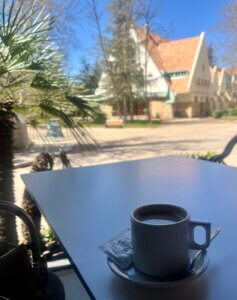
Taking a break for mint tea and a few Moroccan pastries became one of our favourite small rituals in Fes. The tea is poured slowly, the glasses are warm in your hands, and the pastries — almond crescents, honey‑coated spirals, simple butter biscuits — arrive as an easy invitation to pause.
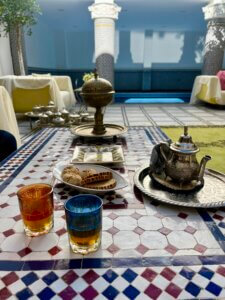
You’ll find these tea spots everywhere: rooftop cafés, tiny corners of the medina, peaceful riad courtyards. It’s a simple pleasure, but one that shapes the rhythm of a day in Fes.
Hearty Moroccan breakfasts
A Moroccan breakfast is really heard to beat. It’s another ritual, and one I’ve loved on all three of my trips to Morocco.
Breakfast usually arrives as a generous spread: warm msemen (flaky square pancakes), baghrir (spongy “thousand‑hole” pancakes), fresh bread, olives, fruit, yoghurt, honey, fresh orange juice and sometimes a small omelette too.
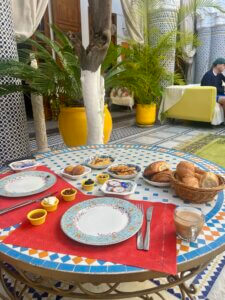
What makes it special is the pace. You sit in a quiet courtyard or on a rooftop, the city still warming up around you, and there’s no rush to be anywhere. It’s a moment of spaciousness before the sensory intensity of the medina — a grounding ritual that sets the tone for the whole day.
A hammam & massage in your riad
A must do is having a hammam and I would recommend to do this either in your own riad or a more modern spa like hammam rather than a traditional place. Many riads offer their own small spa spaces which are quieter and more intimate than the public hammams.
A hammam is all about warmth, exfoliation, and letting your body soften. You’re guided through stages of steam, cleansing, and rinsing, and your skin feels amazing at the end of it. Through the whole ritual there’s no decisions, no rushing, just being looked after. Afterwards, you can add on a massage with fragranced argan oil, which is heavenly.
If your riad offers a hammam, it’s absolutely worth building into your stay. It’s one of the gentlest ways to arrive in your body again.
A day trip to Middle Atlas & the Monkey Forest
We took this day trip from Fes into the Middle Atlas region — a route that includes Ifrane, a Berber cave dwelling, and the cedar forests where the Barbary macaques live. To be completely honest, it wasn’t the most thrilling day trip I’ve ever done, but it was still worth it for a few standout moments.
The first surprise was how the landscape became as we left Fes. Rolling hills, cedar forests, and wide open stretches of countryside — far lusher than I’d imagined for this part of Morocco. And then there’s Ifrane, with its chalet‑style, almost Alpine architecture. It’s unexpected in the best way, and it gives the day a slightly surreal, “am I still in Morocco?” feeling.
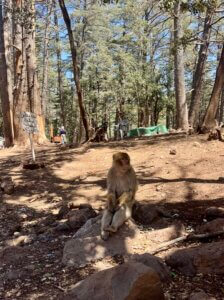
The highlight, though, was the monkey forest. Watching the Barbary macaques up close was so lovely. Being around animals has that natural regulating effect; your attention softens, and everything else drops away. As we arrived there were some local people selling apples and peanuts so that you could feed the monkeys, which we enjoyed. You have to be quick though as the dominant ones can be fast when they know you have food for them!
We also enjoyed learning about Berber culture, especially the visit to the cave home. It offered a glimpse into a way of life that’s simple, resourceful, and deeply connected to the land.
The day as a whole unfolds gently rather than dramatically, but sometimes that’s exactly what you want: a change of scenery, a bit of learning, and a moment with a troop of monkeys that stays with you.
Dinner at The Ruined Garden
One of our favourite meals in Fes was at The Ruined Garden, a relaxed, atmospheric restaurant tucked inside a beautifully restored courtyard. It’s the kind of place that feels both informal and special — lanterns, greenery, and that soft evening light that makes everything slow down a little.
We started with a bean stew and an aubergine and cheese dish that was genuinely delicious. For mains, I had the sardine tajine, full of herbs and citrus, while Mr Travel Psychologist went for the lamb, which was tender and deeply flavoured.
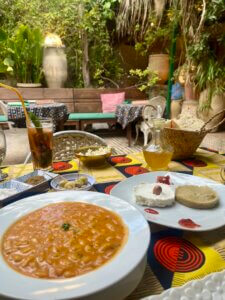
I’d certainly recommend this place for a special meal in Fes. Whilst it feels like a secret, it really isn’t, so make sure to reserve your table in advance.
Where to stay in Fes
In Morocco, your accommodation isn’t just a base in the way it might be on a European city break. Your riad becomes a meaningful part of the experience — a place to slow down, have long breakfasts, sit in the courtyard with a book, or retreat to when the medina feels full. Choosing the right one genuinely shapes the rhythm of your trip.
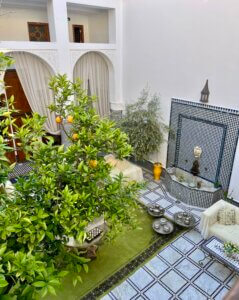
We stayed at Riad Amour and were so happy with our choice. It struck that ideal balance of comfort, calm, and character. The riad has its own hammam which we really appreciated. They also serve dinner on the rooftop. We ate there one evening and the food was delicious; and while it’s not essential, it was lovely to be able to enjoy a bottle of wine with dinner that night.
The atmosphere is warm and unpretentious, helped along by the presence of three very friendly cats, which gets a definite thumbs‑up from me. Our room was comfortable and surprisingly quiet, especially given the excellent location. It felt like a genuine sanctuary.
If you’re planning a trip to Fes, it’s worth choosing a riad you actually want to spend time in. It becomes part of the restorative quality of the trip, not just somewhere to sleep.
When is the best time to visit Fes?
The best time to visit Fes is spring, especially April and May, when the weather is warm, sunny, and ideal for exploring the medina. April in particular offers that sweet spot: comfortable daytime temperatures, cooler evenings, and a city that feels alive without the intensity of summer heat. October and November is also a comfortable time to visit.
Last but not least:
If you’re feeling hedonistic: Try some amlou with your breakfast. Morocco does indulgence incredibly well, and nothing captures that better than this silky spread made from toasted almonds, sesame, argan oil, and a touch of honey. It’s a little like tahini’s more luxurious cousin, and it appears at breakfast tables and cafés all over Fes. If you’re in the mood to treat yourself, this is the moment. Tear off a piece of warm bread, scoop up a generous spoonful, and let the sweetness and nuttiness do their thing.
If you want a sense of accomplishment: Find your way through the medina, which can feel like a maze. But that’s exactly why navigating it becomes such a satisfying little achievement. You don’t need to master the whole thing; you just need to get comfortable following your instincts, noticing landmarks, and trusting that you’ll eventually pop out somewhere familiar.