
This article contains affiliate links. This means this blog will earn a small commission if you book through any of the included links, at no cost to you.
Known as the ‘red city’ Marrakech is one of Morocco’s four imperial cities, along with Fes, Rabat and Meknes. It is a bustling city with a large Medina, or Old Town, with narrow streets and busy souks. It is warm most of the year, with a light jacket required in the winter months.
I enjoyed Marrakesh so much that I’ve been twice; once with Mr Travel Psychologist and once with my Mum. It’s honestly one of my favourite city breaks. It’s perfect if:
- You want to experience a city full of life and energy (it’s not for the feint hearted!)
- You like shopping (or just browsing!)
- You are a foodie!
- You are open to different cultures and customs
- You speak a little French or Arabic (or are willing to learn a few words)
Things to do on a city break in Marrakech
1. Haggle in the souks
It’s hard to describe just how expansive the souks of Marrakech are. You can buy almost anything, from baskets to teapots, leather goods, scarfs, herbs, beauty products, homeware items and clothes. Whilst the souks can be a bit of a tourist trap these days, it is fun to look around and to imagine all the trade that has happened here over hundreds of years.
It is well known that you should never pay the full price quoted at a souk, and the shopkeepers seem to enjoy bartering for most items. The exceptions are items with a fixed price listed for example food or herbs which are sold by weight.
If you are not sure what to buy check out this great post from a fellow blogger about the 20 Best Souvenirs from Morocco You’ll Love

2. Visit Le Jardín Secret
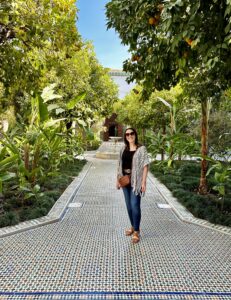
The secret garden of Marrakech is a beautiful courtyard area enclosed by a riad, that was restored in 2016. Prior to this the area had been in complete disrepair. The project, led by a group of entrepreneurs, included the full restoration of the gardens and surrounding buildings.
The gardens are sectioned into two areas; a Moroccan garden and a tropical garden containing unusual plants from around the world. There are also two cafes which provide tranquil areas for a cold drink or a local mint tea. This was my favourite sight in Marrakech and exceeded my expectations; a must see if you enjoy plants, gardens and peaceful settings.
3. Visit the palaces
The Bahia Palace is one of Marrakech’s most visited sights and for good reason. It was built in the late 19th century by Si Moussa, a former slave who rose to become Grand Vizier of the Sultan. Later expanded by his son Ba Ahmed. The palace was designed to showcase the grandeur of Moroccan craftsmanship; with intricate tilework, carved cedar ceilings, and serene courtyards that reflect both Islamic and Andalusian influences.
It was really interesting for us to compare the architecture with the trip that Mr Travel Psychologist and I took trip around Andalucía. The echoes between the two regions are no coincidence. For centuries, trade routes across the Strait of Gibraltar connected southern Spain with North Africa, facilitating the exchange of goods, ideas, and artistry. These routes were vital not just for spices, textiles, and ceramics but for cultural transmission, especially during the era of Al-Andalus, when Islamic influence shaped both regions. The result is a shared aesthetic: intricate tilework, horseshoe arches, and lush courtyard gardens that speak to a legacy of connection and creativity.
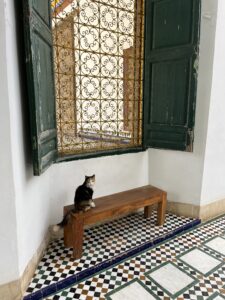
The palace gets very busy so try to visit early if you can. This is one of the advantages of staying in one of the nearby raids, rather than in one of the nearby hotels or resorts (more on this later).
El Badi Palace is much older, and was built in the 16th century. It is certainty not as picturesque and well kept as the Bahia palace, but has more written information to read and is much bigger and quieter. They are both totally worth visiting but I’d say that overall I enjoyed the Badi palace more due to being able to explore a bit more independently, and because it was not so busy.
It’s advisable to dress modestly in the palaces, and more generally outside your riad or hotel. For more on this check out this guide to what to wear in Morocco.
4. Take a food tour
I would highly recommend this food tour which was a great way to sample some authentic Moroccan food. There are food stalls everywhere in Marrakech, but as a tourists it is hard to know where to start or which ones are good! We found the tour a brilliant way to find out more about not only the food, but also the culture and customs of Marrakech.
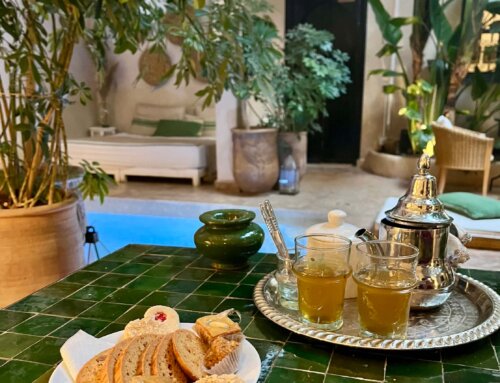
The tour starts at Jamaa El-Fnaa, (the main square) at sunset and lasts for around 3 hours. There are so many stops for delicious food so make sure to arrive with an appetite! You will try food from a number of stalls in the square and in the souks, all accompanied by information about what you’re eating and how it fits with the food culture in Marrakech.
You may also meet Abderrahim “Abdou” from Pâtisserie des Princes, one of the most beloved sweet shops in Marrakech. Nestled near Jemaa el-Fnaa, this iconic pâtisserie is known for its exquisite Moroccan pastries like gazelle horns, almond briouats, and honey-drenched chebakia. Abdou, the charismatic and impeccably dressed older gentleman who runs the shop, has become a local legend. His warm smile and theatrical flair have made him a favourite on travel shows and documentaries, where he often shares stories and offers samples with a flourish.

Our guide Mo was very friendly and did a great job of leading the food tour. It’s probably worth me saying the saying that I was the only woman on the tour as myself and Mr Travel Psychologist joined with a group of guys from Germany. It was a bit apprehensive about this at first, but I didn’t need to be. Mo made everyone feel included and it was a lovely experience all round.
5. Dinner at Pepe Nero
When I booked a city break to Marrakech, I really wasn’t expecting fine dining. I was so wrong.
Pepe Nero is the first example of how wrong I was! This beautiful restaurant has two rooms that are equally stunning; one with a small pool and another centred around an Andalusian fountain. The delicious Italian food, wine and service here were all top notch.
Prices were a little higher than average for Marrakech, and similar to a eating out in the UK. The experience was well worth it though especially if you want a romantic evening or have something to celebrate. Whilst the food prices were similar to a fairly standard meal in the UK, the standard of service was impeccable so it certainly felt like a lovely treat without the price tag.

6. Visit the Craftswoman Centre and Co-Op
Al Kawtar Women’s Cooperative, a remarkable initiative tucked away near Le Jardin Secret in the heart of Marrakesh’s medina. It includes several shops, a few workshops and a café.
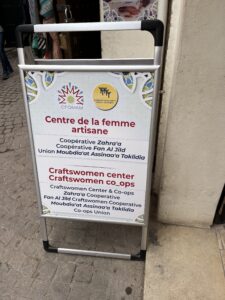
This small but powerful cooperative supports women with physical disabilities by providing training in embroidery, tailoring, and traditional crafts. Each item sold, from hand-stitched linens to delicate jewelry, carries the story of its maker, often shared through personal bios displayed in the shop. Visiting Al Kawtar isn’t just a shopping experience; it’s a chance to connect with the resilience and artistry of Marrakech’s women, and to support a space where dignity and creativity flourish.

The shopkeepers in the main souks are predominantly men and so it was nice to support female artisans by purchasing their products, which were just as affordable.
7. Coffee at Bacha Coffee
Located in the Dar El Bacha museum Bacha Coffee is the height of luxury and silver service. With jazz playing in the background and waiters with fez hats on, you’ll feel like you’ve been transported to 1920’s opulence, but without the price tag.
This branch was founded in 1910 within the opulent Dar el Bacha Palace, once the residence of Thami El Glaoui, the powerful Pasha of Marrakech. It quickly became a cultural salon, hosting luminaries like Winston Churchill, drawn to its refined Arabica brews and intellectual ambiance.
The Dar el Bacha palace, where the café is located, is now a museum. You can either pay for a museum tour or there is a 10 dirham charge to go straight to the coffee shop. Expect there to be a wait for a table as it does get very busy; the café will provide you with a buzzer and you can wait in the beautiful courtyard outside. Try to arrive early if you can.
As well as delicious coffee, there is a range of very tasty brunch and lunch options, and of course cakes. I had the savoury croissant with goats cheese, and it was absolutely delicious.
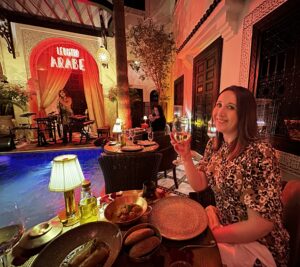
8. Eat dinner and listen to live jazz at Le Bistro Árabe
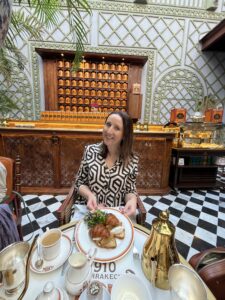
There is so much to love about Le Bistro Árabe. Firstly the beautiful setting, with candlelit ambiance, and tables arranged around a small pool in a traditional riad style. Secondly, the live jazz music which starts at 8pm every night. Thirdly the food which was of a very high standard; we chose four sharing plates which were all delicious and substantial.
The cherry on the top is that the head chef here is a woman named Myriam Ettahri, which was nice to see in Marrakech. She’s a trailblazing Moroccan chef known for her refined, contemporary take on traditional cuisine.
Again prices are on the higher end for Marrakech, but similar to eating out in a nice restaurant in the UK. A good range of wines are served here.
9. Have a traditional hammam
One of the most relaxing experiences during our time in Marrakesh was a a traditional hammam and massage, just metres from the riad I stayed in with my mum (which I’ll recommend later). Tucked away in the medina, this peaceful little spa offered a gentle, welcoming introduction to the hammam ritual — complete with black soap scrub, ghassoul clay, and a soothing massage. The candlelit treatment rooms, warm steam, and rhythmic care made it feel like time slowed down completely. My skin was amazingly smooth afterwards — soft, nourished, and glowing. It was a moment of stillness and connection in the middle of the city’s vibrant energy — and a memory I’ll always treasure.
Where to stay for a city break in Marrakech
I’d highly recommend staying at a riad in the Medina when you visit Marrakesh for a city break. The city can feel overwhelming at times, and so it is nice to have somewhere tranquil to retreat to.
After navigating the vibrant chaos of the souks and winding alleyways, stepping into a riad feels like entering a hidden oasis. The moment you cross the threshold, the noise fades, replaced by the gentle trickle of fountains, the scent of orange blossom, and the cool shade of traditional courtyards.

Riads offer more than just tranquillity. These traditional Moroccan homes, often centuries old, are steeped in history and craftsmanship. Staying in one allows you to experience the architectural beauty and cultural heritage of the medina from the inside out.
On my first visit to the city, I stayed at Riad L’oiseau Du Paradis which was truly gorgeous and very authentic. We found the rooms and communal areas to be lovely, clean and incredibly relaxing. The staff were very friendly and breakfast was traditional and delicious.
On my second visit, I stayed at The Riad of The Moon which was equally stunning. It was a little closer to the main square than my first stay. There is also a Riad cat called Moonie, who was just lovely. One thing to bear in mind is that this riad is down a small alleyway. My Mum and I were a little alarmed by this on arrival, but we didn’t once feel unsafe during our stay. A member of staff met us from our taxi two and from the airport, so there were really no issues.
Honestly, overall there is really not much difference between the two riads. I don’t have anything bad to say about either and if I were to visit again I would be happy to stay in whichever is available!

For other options check out this helpful guide from a fellow blogger about The best affordable riads in Marrakesh
How long do I need for a city break in Marrakech?
We found 3 nights to be sufficient to explore the main sights in Marrakech. This makes it totally perfect for a long weekend break.
If you are staying longer there is still plenty to do. You could consider more day trips out of the city or combining a trip to Marrakech with a trip to another city, such as Fes.
Why Marrakech makes a perfect city break
From the moment you arrive, the city wraps you in warmth: not just the golden sunshine, but the genuine hospitality of its people. Every corner offers something new; the call to prayer echoing through the medina, the scent of orange blossom and spices, the kaleidoscope of colours in the souks. It’s a place where culture feels alive and immersive, where even a short stay can feel like a complete reset. For me, it was the contrast, the unfamiliar rhythms, the richness of tradition, the sheer vibrancy, that made Marrakech feel like a true getaway.

Last but not least:
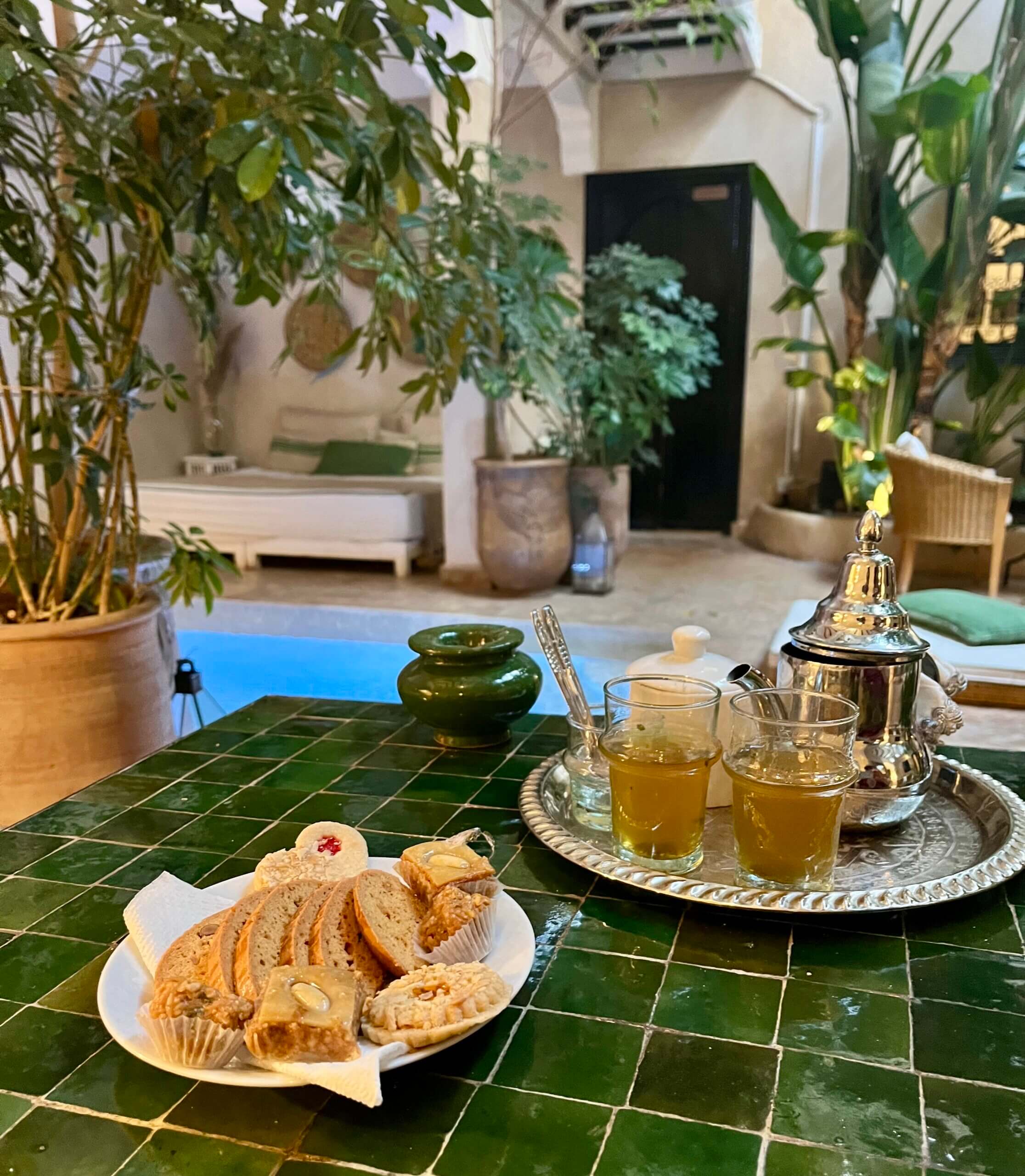
If you’re feeling hedonistic – you will undoubtably try the mint tea and Moroccan pastries while you are here, but this is not at all about hedonism! In this region, mint tea and pastries are a deeply rooted gesture of hospitality and connection. The sweet, frothy mint tea, poured from a height with theatrical flair, is offered as a sign of welcome and respect. Meanwhile delicate pastries like chebakia and briouats reflect centuries of culinary tradition. Together, they anchor social gatherings and everyday encounters, turning simple moments into shared rituals of warmth and generosity.
If you want a sense of accomplishment – navigate your way back to your riad after exploring the souks. There was nothing like getting back to the tranquillity after a long day in the bustling city!
Reasons to be optimistic – The Moroccan people were incredibly friendly and welcoming, and for the most part this felt genuine. Of course there were tourist traps as in any city but the good certainly outweighed the bad experiences for us.
If you are feeling curious – Explore more of Morocco, check out this Morocco Itinerary for First Time Visitors

Please note that our destination guides contain personal recommendations and not professional advice.
If you like experiencing new cultures, check out my previous article What is curiosity and why is it important?