
Dr Charlotte Russell, Clinical Psychologist & Founder
Kandy is a beautiful but often overlooked city. It doesn’t rush to impress you but the misty hills, quiet lakes, the scent of incense drifting from ancient temples, and that unmistakable hum of Sri Lankan life all blend together into something genuinely memorable. Whether you’re here for the culture, the scenery, or simply to soak up a different pace of living, Kandy rewards anyone willing to wander a little and look a little closer.
The Temple of the Tooth (Sri Dalada Maligawa)
Visiting the Temple of the Tooth is one of those moments in Kandy where the city’s spiritual heartbeat becomes impossible to ignore. This isn’t just another historic site; it’s the most sacred Buddhist temple in Sri Lanka, home to what is believed to be a relic of the Buddha himself. For Sri Lankans, the temple is a living, breathing centre of faith, ceremony, and national identity. The daily rituals, the rhythmic drumming, the soft glow of oil lamps — it all creates an atmosphere that feels both intimate and monumental at the same time.
From a practical point of view, the experience starts even before you step inside. Outside the tourist entrance, you’ll find rows of small stalls selling fresh flowers all neatly arranged in bright, fragrant piles. These are offerings for visitors to take into the temple, and while you’re never pressured to buy anything, it’s a simple, meaningful way to participate in the ritual of the place. Plus, there’s something lovely about walking in with your own handful of blooms, joining the quiet procession of people doing the same.

Kandy Lake
Kandy Lake is one of those places that quietly steals the show. It sits right in the heart of the city, but somehow still feels calm — especially as the day winds down. Sunset is when it really comes into its own: the water softens into gold, the hills turn a hazy blue, and the whole place takes on this almost cinematic stillness. It’s the perfect time for a slow wander, whether you’re decompressing after a busy day of sightseeing or just letting the city settle around you.

A small heads‑up, though: as you walk, you’ll almost certainly be approached by people selling tickets to the evening cultural show. It’s not aggressive or uncomfortable — more a steady stream of polite “Hello, madam/sir, cultural show tonight?” moments. You can simply smile, say no thank you, and keep strolling.
As for whether you should see the show… well, I went many years ago and it was perfectly fine — colourful, lively, very much geared towards visitors. I didn’t feel the need to go again on my most recent trip, so perhaps that tells you everything you need to know. It’s one of those “nice if you’re curious, not essential if you’re not” experiences.
Colonial Influence and the Royal Bar
Kandy carries layers of history, and not all of them are comfortable. Sri Lanka’s past includes both Dutch and British colonial rule, and you can still see traces of that era woven into the city’s architecture and institutions. I’m not here to romanticise colonialism — far from it — but understanding these remnants does help you make sense of how the city became what it is today.

One of the most striking examples is the Royal Bar. Step inside and you’re suddenly in a building that feels like it’s been lifted straight out of another century: high ceilings, dark wood, old photographs, and that unmistakable colonial‑era design that’s both beautiful and complicated. It’s an interesting place to pause and reflect on the layers of influence that shaped modern Sri Lanka — the good, the bad, and the in‑between.
On a lighter note, it’s also a surprisingly lovely spot for breakfast. There’s something almost cinematic about sipping your morning tea in a room that feels like it hasn’t changed in decades. It’s a little time capsule, and whether you go for the history, the atmosphere, or simply the eggs and toast, it’s worth a stop.

Royal Botanical Gardens, Peradeniya
The Royal Botanical Gardens are one of Kandy’s real highlights, and they come with their own thread of colonial history woven through them. Sri Lanka’s botanical traditions go back centuries, of course, but the gardens as they exist today were shaped heavily during the British period — and you can feel that influence the moment you step inside. Wide lawns, neat pathways, ornate benches… it all has the unmistakable air of a British park, just one that’s been transplanted into the tropics and left to flourish.

It’s a strange but charming mix: the familiar structure of an English garden, but with towering palm avenues, bursts of tropical colour, and the kind of sunshine that would make any British gardener weep with envy. You can wander for hours here — through orchid houses, spice groves, bamboo forests — and still feel like you’ve only scratched the surface. Plus, you might even see some monkeys doing what monkeys do.

The colonial legacy is complicated, and I’m not here to gloss over that, but the gardens are undeniably beautiful. They’re also a fascinating reminder of how Sri Lanka’s landscape was studied, catalogued, and reshaped during that era. If you enjoy places where history and nature overlap, this is one of the best spots in the country to see that interplay up close.
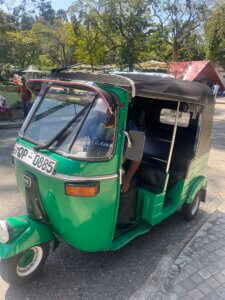
You can easily reach the Botanical Gardens by tuk tuk from the city centre; it’s a quick, breezy ride and usually very affordable. If you’re in the mood for a bit of extra sightseeing, ask your driver to swing through the nearby university campus on the way. It’s genuinely lovely: leafy, peaceful, and full of students heading to lectures, chatting under trees, or playing cricket matches on the grass. It gives you a glimpse of everyday life in Kandy that you don’t always get from the main tourist spots, and it’s a small detour that adds a lot of charm to the journey.
Ambuluwawa Tower
I didn’t climb the Ambuluwawa tower myself as I was off exploring elsewhere, but my friends did. They came back with a mix of awe and “wow, that was tighter than expected.” The tower is famous for its spiralling walkway that wraps around the outside, narrowing as you climb. The payoff, though, is the view: sweeping, dramatic, and absolutely worth it if you’re the kind of person who enjoys a bit of adventure with your scenery.
Just be prepared for the fact that it’s a squeeze — genuinely. People are going up and down the same narrow path, so there’s a fair bit of shuffling, sidestepping, and occasionally pressing yourself against the wall with a polite smile. My friends handled it with good humour and said the view from the top made the whole thing worthwhile.
Dinner at Café 1886
For dinner, Café 1886 is a lovely choice if you’re after traditional Sri Lankan food that feels home‑cooked but still a bit special. The dishes are full of flavour without being fussy, and the whole place has a relaxed, welcoming vibe that makes it easy to settle in after a day of exploring.

One thing to know: they don’t serve alcohol. It’s not a big deal, but it’s worth mentioning so you’re not surprised when you sit down. If you do fancy a drink afterwards, the Royal Bar is only a short walk away, and given its old‑world charm, it’s actually a rather perfect place to end the evening.
Where to Stay
This section contains affiliate links, so if you book through the links provided this blog will earn a small commission, at no cost to you.
Kandy has plenty of accommodation options, but two places really stood out to me for completely different reasons.
The Royal Bar & Hotel
If you want to lean into the city’s colonial architecture and atmosphere, the Royal Bar & Hotel is a bit of a treat. The rooms are genuinely beautiful — high ceilings, polished wood, that slightly old‑world charm that makes you feel like you’ve stepped into a different era. The only caveat is the noise. Because the bar downstairs is lively (in a good way), evenings can be a little on the loud side. If you’re a light sleeper, it’s something to consider. If you’re not, it’s a wonderfully characterful place to base yourself.
Lotus Villa, Peradeniya
For something completely different, Lotus Villa sits up in the hills of Peradeniya, and the views alone are worth the stay. Waking up to mist drifting over the mountains is one of those quietly magical travel moments that stays with you. It’s peaceful, spacious, and feels a world away from the bustle of the city — even though it’s only a short tuk tuk ride back into Kandy. If you like a slower, more scenic start and end to your day, this is a fantastic option.

How Long to Stay in Kandy
You can see the main sights of Kandy in a single night — two if you like to take things slowly and still feel like you’ve done the city justice. The lake, the Temple of the Tooth, the gardens, a good dinner… it all fits comfortably into a short stay.
But here’s the thing: Kandy also makes an excellent base for some truly epic day trips. If you’re planning to explore further afield including Sigiriya, National parks, and tea country, staying a little longer starts to make a lot of sense. It’s central, well‑connected, and far less hectic than trying to hop between towns every night.
For more ideas on how to build Kandy into a bigger adventure, you can check out my full guide to 7 days in Sri Lanka, where I break down exactly how to make the most of it.
Last but not least..
If you’re feeling hedonistic – Kandy isn’t a place of wild indulgence, but if you want a small moment of pure pleasure, order a Sri Lankan chai. It’s milky, fragrant, and gently spiced — the kind of drink that makes you pause, breathe, and feel instantly grounded. There’s something wonderfully soothing about sipping a hot chai after a day of exploring; it’s simple, comforting, and honestly one of the most quietly luxurious things you can do in the city.
If you want a sense of accomplishment – Head out to Horton Plains National Park and tackle the loop trail — it’s one of those walks that leaves you pleasantly tired and quietly proud of yourself. The route takes you through open grasslands, cloud forest, and misty stretches that feel almost otherworldly. Along the way you’ll pass Baker’s Falls, a beautiful, thundering waterfall that’s the perfect mid‑hike pause.
The real highlight, though, is World’s End; a sheer cliff with a jaw‑dropping drop and sweeping views over the valley below. On a clear morning it’s spectacular.

It’s not a difficult hike, but it’s long enough to feel like you’ve genuinely earned your dinner (and your chai) afterwards.
Reasons to be optimistic: Sri Lanka gained independence from British rule in 1948, and independence is celebrated across the country on the 4th of February. This is a day of great pride and is marked by parades and celebrations of freedom across the nation.