Dr Charlotte Russell, Clinical Psychologist and Founder
In a year shaped by geopolitical uncertainty and the sharp rise in airfares, many people are rethinking how they travel. The idea of a staycation, once seen as a compromise, is becoming an appealing and pragmatic choice for 2026. Travelling closer to home offers a sense of stability in unpredictable times, but it also opens the door to something more meaningful: the chance to rest, reconnect, and rediscover places closer to home. As more of us look for ways to feel restored without the stress of long‑haul logistics, the psychological benefits of domestic travel are becoming impossible to ignore.
Learning that restoration is an internal process—not a destination
One of the most compelling reasons to consider a staycation is that psychological restoration isn’t something we “get” from a far‑flung destination; it’s something we cultivate internally. A beautiful setting can certainly support that process, but the core ingredients of rest—slowing down, shifting pace, stepping outside routine—aren’t dependent on distance. In fact, research consistently shows that our capacity to feel restored is shaped far more by mindset than by mileage.
There’s also growing evidence that we can boost wellbeing simply by experiencing our own city with fresh eyes. Research on psychological distancing tells us that stepping outside our habitual patterns, even slightly, helps us see the familiar as new (Kross & Ayduk, 2017). Sociologists have long described this as adopting a “tourist gaze”—the act of noticing, lingering, and paying attention in ways we rarely do in daily life (Urry & Larsen, 2011).
This is the quiet power of a staycation. It removes the pressure to chase transformation through international travel and instead invites us to rediscover what’s already around us. When we let go of the idea that restoration requires a flight, we create space for something more grounded: the possibility that rest can be found close to home, in the small shifts that help us feel more present, spacious, and restored.
Staycations reduce cognitive load and emotional stress
Another key benefit of travelling within the UK is the relief that comes from having fewer decisions to make. International travel can be surprisingly mentally demanding—airports, logistics, timetables, and this all adds to our cognitive load. When we’re already juggling busy lives, that extra layer of decision‑making can quietly drain the very resources we’re hoping to replenish.
A staycation naturally simplifies things. With fewer moving parts, there’s less to plan and less that can go wrong, which aligns with research showing that reducing decision‑making demands can ease stress and support better mood (Vohs et al., 2008). If we’re already feeling overloaded, choosing a break that removes rather than adds to our mental demands can be a small but meaningful act of care. Sometimes rest begins not with doing more, but with gently taking things off our plate.
Staycations help us notice and feel grateful for the small pleasures
One of the quieter gifts of a staycation is the way it draws our attention back to the small, often overlooked pleasures that shape our everyday lives. When we’re not rushing through airports or adjusting to new time zones, we have more mental space to notice the small pleasures: a local café, a walking route, and the way morning light falls. These moments can be surprisingly restorative.
Psychologically, this makes sense. Research on gratitude and wellbeing shows that positive emotions often arise not from dramatic experiences but from paying closer attention to ordinary, meaningful details (Emmons & McCullough, 2003). Similarly, studies on “savouring” suggest that slowing down enough to fully experience small moments—good food, a quiet morning, a beautiful view—can significantly boost mood and life satisfaction (Bryant & Veroff, 2007).
A staycation creates the conditions for this kind of noticing. Without the cognitive load of complex travel, we’re more able to tune into what feels good right where we are. And when we start to recognise the small pleasures woven into our daily environment, it often brings a sense of gratitude, not just for the break itself, but for the life we return to. In the current geopolitical climate, we may also feel particularly grateful for being able to take this time for ourselves in a place that’s peaceful.

What staycations don’t necessarily give us
It’s also worth acknowledging what staycations can’t always replicate. Travelling further afield often brings a sense of adventure, cultural immersion, and new situations that can stretch us in meaningful ways. At The Travel Psychologist, we talk a lot about how these experiences support personal growth—how stepping into unfamiliar environments can expand our perspective, challenge our assumptions, and help us understand ourselves in new ways.
Choosing a staycation this year doesn’t mean losing access to those benefits forever. It simply reflects the realities of the moment: rising airfares, a cost of living crisis, global uncertainty, and the very human need to feel grounded when the world feels unpredictable. This is a pause, not a permanent shift.
And importantly, staying local doesn’t mean abandoning novelty or adventure altogether. Psychological research shows that feelings of exploration, curiosity, and gratitude aren’t tied to distance; they’re tied to how we engage with our surroundings. With a little intention, we can still cultivate the emotional qualities we associate with travel—freshness, discovery, perspective—even when we’re close to home.
This is where staycations become more than a fallback. They invite us to be creative about how we seek out meaning and pleasure, and to rediscover the possibility of adventure in the everyday.
How to cultivate novelty, adventure and gratitude on a UK staycation
Even when we’re travelling within the UK, there are plenty of ways to bring in the emotional qualities we often associate with going further afield—freshness, discovery, perspective and a gentle sense of adventure. Here are some ways to do that:
1. Choose places that feel different from your everyday environment
If you live in a city, a coastal town or a rural retreat can offer the sensory contrast you’re craving. If you’re usually surrounded by countryside, a vibrant city break can provide the novelty and stimulation that feel energising.
Shortly after the initial covid restrictions were lifting, I remember taking a short break to Cornwall. We stayed in a lodge in the forest and took an guided evening nature walk. It was so different to the usual trips I take, and I’ll always remember how cool it was to listen to the bats and see how brightly the moon and stars shone when we paid attention. I’ll always remember that trip fondly, even though I probably wouldn’t have taken it without the restrictions on international travel.
2. Explore your destination with a “tourist mindset”
Even within the UK, every region has its own history, dialect, food culture and landscape. Visiting museums, heritage sites, independent shops or local markets can create that sense of discovery we often associate with international travel.
3. Build in small adventures
A new hiking trail, a coastal path you’ve never walked, a boat trip, a foraging workshop, a guided tour, or even a scenic train journey can all bring that gentle thrill of doing something unfamiliar. Research shows that even modest novelty can boost mood and curiosity.
As an example, last year I tried camping for the first time and I loved it! It took a little bit of time to adjust initially but after the first day I quickly felt more comfortable. Stepping out of our comfort zone can do wonders for our well-being.

4. Seek out local flavours
Trying regional dishes, visiting a farm shop, or booking a restaurant known for local produce can offer a cultural experience in its own right. Food is one of the easiest ways to feel connected to a place.
5. Create moments of awe
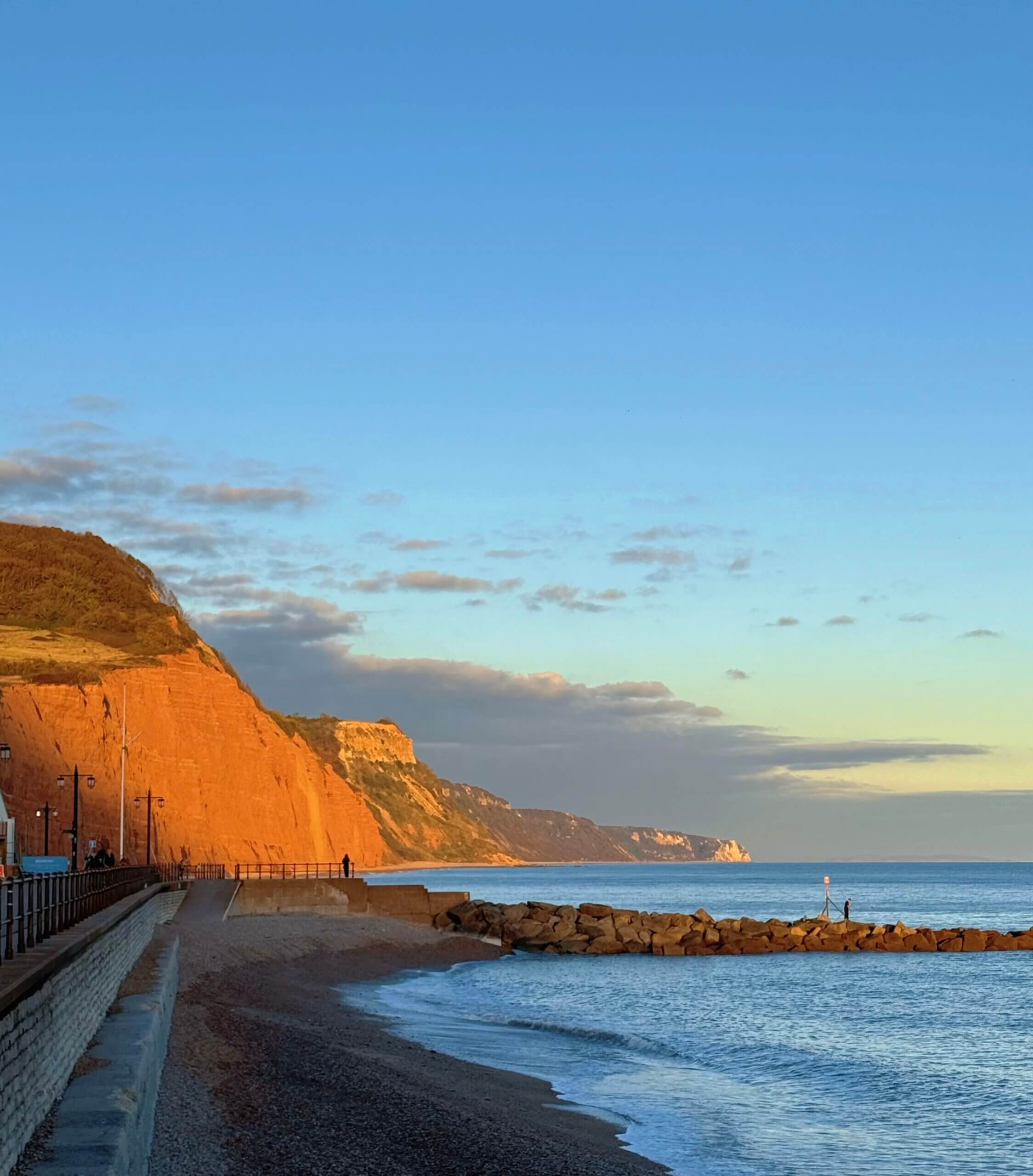
The UK is full of awe‑inspiring places—clifftops, moorland, ancient forests, dramatic coastlines, historic architecture. Awe doesn’t require distance; it requires attention. Building in one or two “wow” moments can shift perspective in the same way a bigger trip might.
6. Practise intentional gratitude
Being away from home—even just a couple of hours away—creates enough distance to notice what feels good about both the trip and your everyday life. Gratitude research shows that these small recognitions can meaningfully lift wellbeing.
7. Put boundaries in around screen time
One of the reasons holidays feel restorative is the permission to switch off. Even on a UK break, setting boundaries with work, email or social media can help create that “holiday mode” feeling we often associate with going abroad.
UK staycation inspiration from The Travel Psychologist team
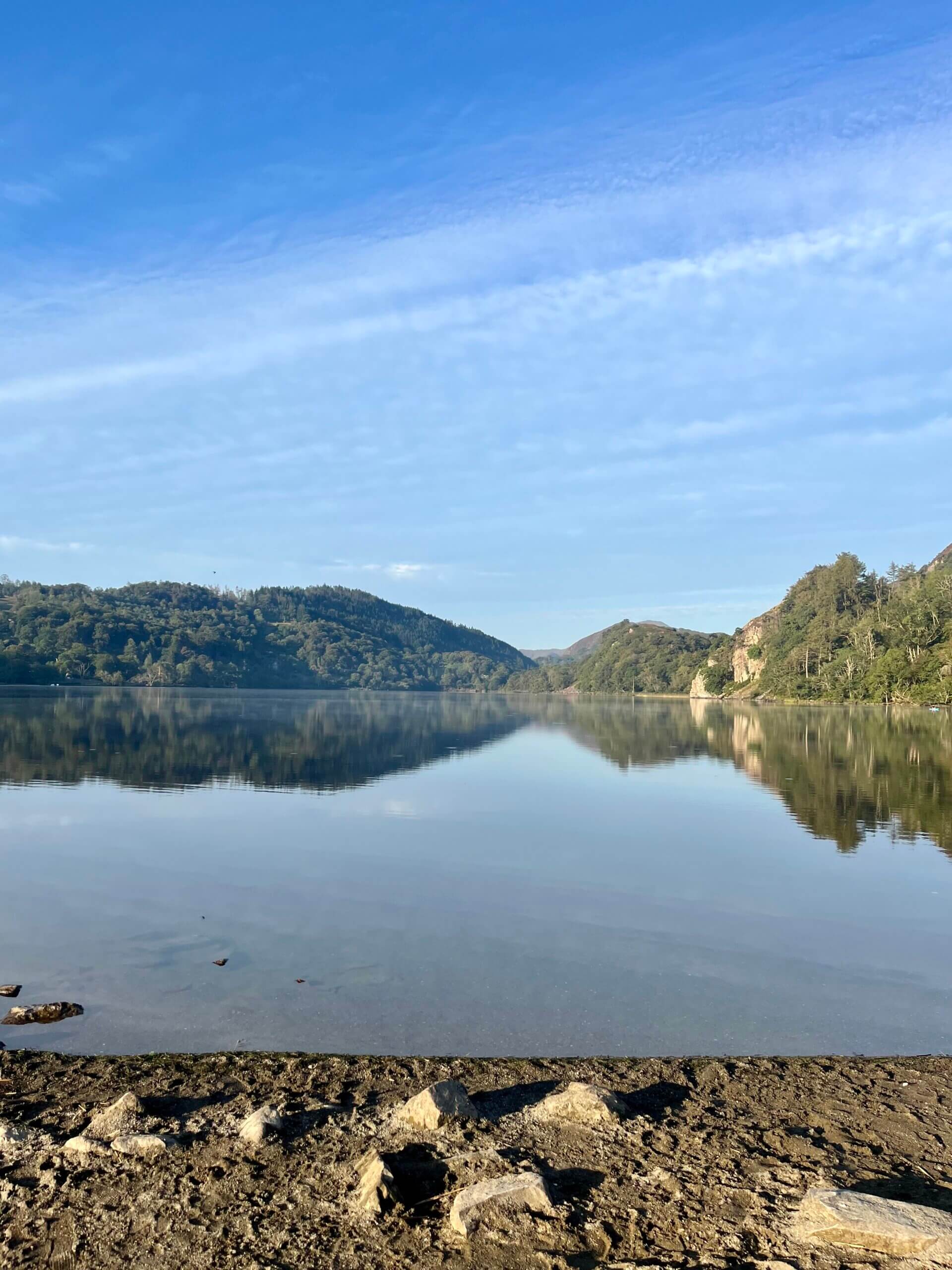
If you’re considering a staycation this year and looking for somewhere that offers both ease and emotional richness, our team has curated several UK guides based on the places we return to again and again. From the historic charm of York to the Roman walls and riverside walks of Chester, these cities offer the perfect blend of novelty and comfort. For those craving nature and a deeper sense of escape, our North Wales 5‑day itinerary explores mountains, coastlines and small adventures that feel worlds away from everyday life. And if you’re drawn to dramatic scenery, slow mornings and windswept beaches, our Cornwall itinerary captures the restorative power of the UK’s far southwest.
Each guide is designed with restoration in mind—helping you find the experiences, rhythms and small pleasures that genuinely support wellbeing.
Final thoughts
In a year when many of us are seeking steadiness as much as escape, staycations offer a way to rest that feels both grounded and genuinely restorative. They may not deliver the full sweep of novelty or cultural immersion that international travel brings, but they do give us something equally valuable: the chance to slow down, to notice what’s good, and to reconnect with the places and rhythms that support our wellbeing. And with so much of the UK offering beauty, history and small moments of awe, a staycation isn’t a lesser version of travel, it’s simply a different kind of nourishment. One that meets us where we are, and reminds us that restoration is often closer than we think.
References
Berto, R. (2005). Exposure to restorative environments helps restore attentional capacity. Journal of Environmental Psychology, 25(3), 249–259.
Bryant, F. B., & Veroff, J. (2007). Savoring: A new model of positive experience. Psychology Press.
Emmons, R. A., & McCullough, M. E. (2003). Counting blessings versus burdens: An experimental investigation of gratitude and subjective well‑being in daily life. Journal of Personality and Social Psychology, 84(2), 377–389.
Kaplan, S. (1995). The restorative benefits of nature: Toward an integrative framework. Journal of Environmental Psychology, 15(3), 169–182.
Kross, E., & Ayduk, O. (2017). Self-distancing: Theory, research, and current directions. Advances in Experimental Social Psychology, 55, 81–136.
Sturm, V. E., et al. (2020). Everyday experiences of awe: An ecological momentary assessment study. Emotion, 20(6), 993–997.
Urry, J., & Larsen, J. (2011). The tourist gaze 3.0. Sage.
Vohs, K. D., Baumeister, R. F., Schmeichel, B. J., Twenge, J. M., Nelson, N. M., & Tice, D. M. (2008). Making choices impairs subsequent self‑control: A limited‑resource account of decision making, self‑regulation, and active initiative. Journal of Personality and Social Psychology, 94(5), 883–898.