
Dr Charlotte Russell, Clinical Psychologist & Founder
There’s something quietly powerful about reading while you travel. It’s not just about passing time on a plane or lounging by the pool, it’s about creating space. Space to reflect, to imagine, to reconnect with parts of yourself that get buried under routine.
I love a good read on a trip, but I’m pretty picky when it comes to what resonates with me. Unsurprisingly as a psychologist I like books with psychological themes, interesting characters and stories of personal growth. I’m going to share my absolute favourites with you later, along with when and where it’s best to read them. But first I’m sharing my thoughts on why reading when we travel is good for us.
The psychological benefits of reading on vacation
Immersing ourselves in a story offers a way to rest, soothe our nervous system and to recharge. It allows your brain to shift from task-focused thinking to a calm and soothed state where reflection, insight, and emotional integration flourish.
Being in a beautiful place only enhances this process. When we look up from the imaginary world we’ve been immersed in, and we see a beautiful beach, view or garden, we experience a range of positive emotions. This is like gentle, positive stimulation from all directions. It’s like suddenly having access to delicious and varied food that nourishes our body (and maybe we’re getting that too on vacation). Our mind is getting all the stimulation it needs, from both an imaginary and real perspective.
Connecting with characters in books can enhance empathy. There aren’t many situations in life where we gain insight into someone else’s inner world like when we read books. Even if you work in a helping profession like I do, through reading we are able to connect without the responsibility for helping, which is very different. It helps us to flex our empathy muscle as a person, rather than as a professional.
Both books and travel give us space from the challenges we face and can help us explore our own identity. Both can prompt questions about who we are and what we value, and can act as mirrors or maps, helping us process change or imagine new possibilities.
Books and travel can also be catalysts for personal growth. Reading about the journey that other people, or characters have taken helps us to reflect on our own. This can help us to see the challenges that we face differently, and to step more confidently into our own path.
In short, reading on vacation isn’t just relaxing, it’s restorative. It’s also a way to nourish your inner world while exploring the outer one.
My favourite books to read on vacation
Wild by Cheryl Strayed
Book Summary
Wild: From Lost to Found on the Pacific Crest Trail is Cheryl Strayed’s raw and riveting memoir of a 1,100-mile solo hike through the American wilderness. After the death of her mother, a fractured family, and a descent into addiction and self-destructive choices, Strayed sets out on the Pacific Crest Trail with no prior hiking experience. Her journey is both physical and emotional, a pilgrimage through grief, identity, and resilience. With blistered feet, a backpack nicknamed “Monster,” and a trail full of strangers and revelations, she slowly rebuilds herself, one step at a time.
Psychological Themes
Wild is a masterclass in emotional excavation. Key psychological themes include:
- Grief and identity fragmentation: Strayed’s journey begins in the aftermath of profound loss, and her hike becomes a metaphor for piecing together a shattered self.
- Self-redemption and forgiveness: The trail offers space for reckoning with past choices, relationships, and the inner critic.
- Resilience through adversity: Physical hardship mirrors emotional struggle, highlighting the mind-body connection in healing.
- Solitude and self-reliance: Strayed learns to trust herself, finding strength in aloneness rather than fearing it.
This Book Would Be Good to Read If…
You’re:
- Navigating a life transition — divorce, bereavement, or identity shift.
- Feeling emotionally stuck and craving a sense of movement or renewal.
- Seeking inspiration for solo travel or personal reinvention.
- Exploring self-forgiveness and the courage to start over.
Best Places to Read This Book
To fully absorb the emotional and environmental textures of Wild, it’s best to read on a trip where you have space to process the content. It’s not the kind of book that’s good for picking up and putting down on a busy trip. The ideal would be to read this on some kind of retreat or solo trip, or on a relaxed trip where you will have space to reflect. It would also be a great book to absorb yourself in if you will be spending a lot of time travelling.
The Olive Grove by Eva Glyn
Book Summary
Set on the sun-drenched Croatian island of Korčula, The Olive Grove follows Antonia Butler, a woman at a crossroads in life, who takes a job as a housekeeper at a beautifully restored farmhouse, Vila Maslina. Hoping to leave behind a complicated past, she finds herself drawn into the island’s layered history and the quiet intensity of its owner, Damir, a man haunted by the legacy of war. As secrets surface and relationships unfold, the novel explores how place, memory, and connection can shape healing.
Psychological Themes
This novel gently explores emotional complexity through:
- Post-traumatic growth: Damir’s character embodies the long shadow of war and the slow, painful process of reclaiming peace.
- Escape and reinvention: Antonia’s journey reflects the psychological need to step away from toxic patterns and rediscover autonomy.
- Intergenerational healing: The story touches on how unresolved trauma can ripple through relationships and how empathy can bridge those divides.
- Place as therapy: The island itself becomes a character, offering sensory richness, historical depth, and a backdrop for emotional renewal.
- Friendship: I found the developing friendship between Damir and Antonia to be deeply moving. It reminded me of how powerful friendships can be.
This Book Would Be Good to Read If…
You’re:
- At a crossroads in your life and want to reflect on how solo travel can be healing.
- Feeling emotionally overwhelmed and craving a gentle, immersive escape.
- Seeking stories that explore healing from trauma without being overly heavy.
- Interested in the psychology of place and how landscapes and culture can support transformation.
- Navigating relationship transitions or reflecting on past choices.
Best Places to Read This Book
To mirror the novel’s atmosphere and emotional tone, it would be best to read it in the Mediterranean in order to enhance your connection with the themes in this book. I actually read it on my trip around Croatia and it was wonderful to read about the culture and customs of the country whilst I was there. It’s not at all necessary to be in Croatia to enjoy this novel but it certainly will enhance your experience if this is an option.
The Midnight Library by Matt Haig
Book Summary
The Midnight Library is a poignant, speculative novel that follows Nora Seed, a woman overwhelmed by regret and depression. On the brink of suicide, she finds herself in a mysterious library suspended between life and death. Each book on its shelves represents a different version of her life one she could have lived had she made different choices. Guided by her childhood librarian, Mrs. Elm, Nora explores these alternate realities, from Olympic swimmer to glaciologist to rock star, searching for meaning, happiness, and ultimately, a reason to live. It’s a story about possibility, perspective, and the quiet courage of choosing life.
Psychological Themes
Matt Haig’s novel is rich with therapeutic and existential insight:
- Regret and cognitive distortion: Nora’s despair is shaped by distorted beliefs about failure and worthlessness. The library allows her to challenge these narratives. I’m sure we have all wondered what life would be like if we had made different choices. I certainly have. This book allows us to explore these regrets and how unhelpful they are.
- Existential freedom: The story explores the idea that meaning is not found in perfection, but in presence and agency.
- Depression and perception: Nora’s journey illustrates how mental illness can skew reality, and how reframing can restore hope.
- Self-acceptance and resilience: The novel affirms that healing begins when we stop chasing ideal lives and start embracing our own.
This Book Would Be Good to Read If…
You’re:
- Feeling emotionally lost or weighed down by regret.
- Seeking a gentle, life-affirming read that doesn’t shy away from darkness.
- Exploring existential questions about purpose, identity, and choice.
Best Places to Read This Book
Unlike some of my other recommendations, this book is uplifting and not particularly heavy, and connection to place is not an important theme. This means that it is a good book to read in a range of settings and it’s totally possible to dive in and out of. I did this myself on my Rome to Amalfi Coast itinerary and even though it was a busy trip, I was able to take on the lessons from the book. Three years later I still think about it often. So if you’re looking for a great book for any type of vacation, this is the one for you.

Driving Over Lemons by Chris Stewart
Book Summary
Driving Over Lemons: An Optimist in Andalucía is a humorous and heartwarming memoir chronicling Chris Stewart’s impulsive decision to buy a dilapidated farm in the Alpujarras mountains of southern Spain. With no road access, electricity, or running water, and a previous owner who refuses to leave, Stewart and his wife Ana dive headfirst into rural life. Through sheep shearing, scorpion encounters, and eccentric neighbours, they slowly build a life rooted in simplicity, community, and nature. Stewart’s writing is full of charm, wit, and affection for the land and its people.
Psychological Themes
Though light in tone, the book offers rich psychological undercurrents:
- Optimism and adaptability: Stewart’s relentless positivity models how attitude can shape experience, especially in unfamiliar or challenging environments.
- Resilience through simplicity: The couple’s embrace of a slower, more elemental lifestyle reflects the therapeutic power of minimalism and nature.
- Belonging and identity: The memoir explores how place and community can help re-root a person after disconnection or transition.
- Mindful living: The rhythms of farming and seasonal change encourage presence, patience, and appreciation for small joys.
- Cultural integration: Stewart’s journey illustrates the psychological process of adapting to a new culture, from outsider to participant.
This Book Would Be Good to Read If…
You’re:
- Feeling burnt out by modern life and craving a slower pace.
- Considering a life change — relocation, career shift, or lifestyle reinvention.
- Interested in rural living, expat stories, or the psychology of place.
- Seeking a gentle, uplifting read that blends humour with insight.
- Exploring the idea that joy can be found in imperfection and unpredictability.
Best Places to Read This Book
To echo the spirit of Driving Over Lemons, it would be ideal to read in a Mediterranean country such as Spain, Italy, Greece or Croatia. However anywhere more rural and with a slower pace of living would be great, so get yourself a copy, head out into nature and turn your phone off. It’s not difficult to be fully immersed in this book as it’s so uplifting.
The Sky Beneath Us by Fiona Valpy
Book Summary
The Sky Beneath Us is a dual-timeline novel that weaves together the lives of two women separated by nearly a century. In 1927, Violet Mackenzie-Grant embarks on a journey from Scotland to Kathmandu, driven by a passion for botany and a longing for adventure. In 2020, her great-great-niece Daisy Laverock, recently divorced and facing an empty nest, retraces Violet’s steps after discovering her journals. Stranded in Nepal during the pandemic, Daisy finds herself relying on the kindness of strangers and the resilience she inherits from Violet. As she uncovers long-held family secrets, Daisy begins to rebuild her own sense of purpose and belonging.
Psychological Themes
Valpy’s novel is rich in emotional and existential depth:
- Intergenerational resilience: The story highlights how strength and wisdom can echo across generations, shaping identity and healing.
- Post-traumatic growth: Both women face grief and loss, emotional upheaval and emerge with deeper self-awareness and renewed purpose.
- Belonging and connection: The novel explores how relationships with people, places, and heritage can anchor us during times of uncertainty.
- Nature as healer: The landscapes of Nepal and Scotland offer more than beauty, they become spaces for reflection, transformation, and emotional grounding.
- Letting go and embracing uncertainty: Daisy’s journey illustrates the psychological power of surrendering control and trusting the unknown.
This Book Would Be Good to Read If…
You’re:
- Experiencing a life transition such as divorce, career change, or empty nesting.
- Seeking a story that blends adventure with emotional depth.
- Interested in botany, travel, or cultural exploration as metaphors for growth.
- Feeling disconnected from your roots and craving reconnection.
- Looking for a novel that affirms the healing power of nature, history, and human kindness.
- You have space to read a novel that is heavy in parts but reflects on our capacity for post traumatic growth.
Best Places to Read This Book
As this book is heavy in parts, it requires emotional capacity to get the most out of it. I can see that it could feel too heavy if you were reading it on a busy trip. However it is great for a solo trip or a retreat, especially if you want to connect with the spirituality and deep emotional themes within the book. I actually read this on a yoga retreat myself and found this to be a great fit. Unfortunately, I did not read it in Nepal, but it has certainly made me want to visit! If you happen to be going there then this would be the ultimate book to read whilst visiting.

Reluctantly Home by Imogen Clark
Book Summary
Reluctantly Home follows Pip Appleby, a successful human rights lawyer whose life is upended by a tragic accident. Overwhelmed by guilt and panic attacks, she retreats to her family’s farm, a place she once tried to leave behind. There, she discovers the diary of Evelyn Mountcastle, a former actress who faced her own heartbreak decades earlier. As Pip immerses herself in Evelyn’s story, she begins to see parallels between their lives. When the two women meet, an unexpected friendship blossoms, offering both a chance to confront the past and rediscover hope.
Psychological Themes
Imogen Clark’s novel explores emotional complexity with sensitivity and depth:
- Grief and guilt: Both protagonists are shaped by trauma and the emotional weight of past decisions.
- Identity and reinvention: Pip’s return home forces her to reconcile her professional persona with her authentic self.
- Psychological trauma: Pip’s panic attacks and emotional withdrawal reflect the psychological toll of unresolved trauma.
- The power of connection and friendship: The novel affirms that healing often begins through shared stories and compassionate relationships.
This Book Would Be Good to Read If…
You’re:
- Processing grief, guilt, or emotional upheaval.
- Feeling disconnected from your roots or questioning your life path.
- Interested in stories of female resilience and friendship.
- Seeking a novel that blends gentle introspection with emotional depth.
- Craving a reminder that healing is possible through connection and self-compassion.
Best Places to Read This Book
I found this book to be wonderful and not super heavy, although it does deal with themes of trauma. Ideally you would have a little emotional space so it’s a good option if you are going on a solo trip, beach holiday or relaxed break. It’s set in the UK so it’s also a good option if you are on a staycation and you want to be immersed in a great book without being transported to somewhere warmer.
The Storyteller of Casablanca by Fiona Valpy
Book summary
Set between wartime 1940s Casablanca and the present day, this dual-timeline novel follows two women — one a young refugee fleeing Nazi-occupied Europe, the other a modern-day expat navigating her own emotional upheaval. Through journals, memories, and quiet acts of courage, their stories intertwine in a way that reveals resilience, belonging, and the power of storytelling.
Psychological themes
Valpy’s writing gently explores themes of displacement, identity, and emotional recovery. The novel touches on trauma and healing, but in a way that’s accessible and reflective rather than clinical. It’s also a beautiful meditation on how stories — both written and lived — help us make sense of our experiences.
This book would be good to read if…
You’re drawn to layered historical fiction with emotional depth, or you’re in a reflective mood while travelling. It’s especially resonant if you’ve ever felt the tension between past and present, or the quiet strength of starting over.
Best places to read this book
I read this during my recent visit to Marrakesh, and it felt beautifully fitting. Valpy creates such a strong sense of place, and reading her work in Morocco added a layer of richness to the experience. It’s perfect for slow afternoons in a riad courtyard, or while watching the sunset over the rooftops — somewhere quiet, warm, and steeped in atmosphere.

The Night Tiger by Yangsze Choo
Book Summary
Set in 1930s colonial Malaysia, The Night Tiger weaves together folklore, mystery, and coming‑of‑age tenderness. The story follows Ji Lin, a young apprentice dressmaker moonlighting as a dance‑hall girl, and Ren, an eleven‑year‑old houseboy tasked with returning his late master’s missing finger to its rightful grave. Their paths cross as rumours of a man‑eating tiger ripple through the community. The novel blends magical realism with historical detail, creating a lush, atmospheric world where superstition and reality blur.

Psychological Themes
- Identity and transformation: Characters navigate who they are versus who society expects them to be, mirroring the liminal feeling of travel.
- Colonial power dynamics: The novel subtly explores hierarchy, belonging, and the psychological impact of living under imposed structures.
- Myth, meaning‑making, and the unseen: Folklore becomes a way for characters to understand fear, grief, and uncertainty — much like travellers use stories to make sense of unfamiliar places.
- Duty, loyalty, and moral ambiguity: Ren’s quest and Ji Lin’s secrecy both raise questions about responsibility and the emotional weight of promises.
This Book Would Be Good to Read If…
- You love atmospheric fiction that deepens your sense of place — especially when travelling through Southeast Asia.
- You enjoy stories that blend mystery with magical realism rather than choosing one genre lane.
- You’re curious about colonial‑era history and want a narrative that brings it to life without feeling like a history lesson.
Best Places to Read This Book
I loved reading this book through my recent 3 weeks in Southeast Asia trip, it felt like the perfect companion to travelling in this part of the world.
The Sicilian Inheritance by Jo Piazza
Book Summary
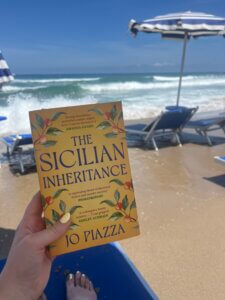
The Sicilian Inheritance is Jo Piazza’s gripping blend of mystery, family history, and cultural immersion set between modern‑day Palermo and the island’s past. When Sara, a New York food‑writer reeling from personal upheaval, discovers she has inherited a mysterious Sicilian property from her great‑aunt, she travels to Palermo to uncover the truth. What begins as a simple legal errand becomes a layered investigation into family secrets, contested land, and a century‑old disappearance that shaped generations of women.
The novel is rich in sensory detail — food, landscape, dialect, and the rhythms of Sicilian life — making it an unusually atmospheric read. I read it in Palermo added an extra dimension: it’s one of those books that helps you understand a place from the inside out, revealing the emotional architecture beneath the culture.
Psychological Themes
- Intergenerational identity — The story explores how women inherit not just land or legacy, but silence, sacrifice, and unresolved emotional histories. Sara’s journey becomes a confrontation with the narratives she has absorbed about duty, independence, and belonging.
- Place-based healing — Sicily functions as a psychological container: its pace, traditions, and contradictions create space for Sara to examine her own grief, burnout, and relational patterns.
- Female autonomy and cultural constraint — The novel highlights how women navigate patriarchal systems — historically and today — and how reclaiming one’s story can be an act of liberation.
- Mystery as emotional metaphor — The search for the truth mirrors Sara’s internal search for clarity, stability, and self-trust after a destabilising period in her life.
This Book Would Be Good to Read If…
You’re:
- Exploring identity through travel and want a novel that deepens your understanding of local culture.
- Interested in intergenerational psychology, especially how family secrets shape emotional inheritance.
- Navigating a personal transition and drawn to stories where place becomes part of the healing process.
Best Places to Read This Book..
Of course, anywhere in Sicily would be ideal, but more broadly Southern Italy, or any Mediterranean culture with a strong identity would help you to reflect on the themes in the book.
The Santorini Writing Retreat by Eva Glyn
Book Summary
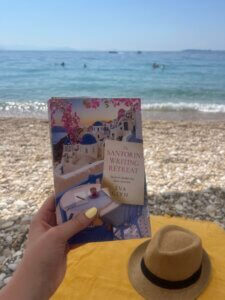
The Santorini Writing Retreat follows three women — Jo, Zina, and Karmela — whose lives intersect on a writing retreat set against Santorini’s luminous backdrop. Each woman begins the retreat carrying her own private challenges: grief, uncertainty, and a secret resulting in high levels of shame. What unfolds is an uplifting, emotionally textured story about how strangers become companions, how creativity opens doors to self-understanding, and how friendship can be a catalyst for profound personal growth.
The retreat becomes a container for transformation. Through shared meals, writing exercises, and the gentle rhythms of island life, the women begin to trust one another, reveal their vulnerabilities, and build relationships that help them navigate the complexities of their individual journeys. It’s a warm, hopeful novel about connection, courage, and the healing power of being truly seen.
Psychological Themes
- Female friendship as emotional scaffolding — The novel shows how women can hold one another through uncertainty, grief, and change, offering support that is both practical and deeply emotional.
- Personal growth through creativity — Writing becomes a mechanism for self-reflection, helping each woman articulate what she wants, what she fears, and what she’s ready to leave behind.
- Cross-cultural connection — Their varied backgrounds enrich the retreat, highlighting how difference can deepen rather than divide relationships.
- The therapeutic role of place — Santorini’s beauty and pace create a gentle environment that allows emotional processing to unfold more naturally.
This Book Would Be Good to Read If…
You’re:
- Craving an uplifting, relationship-centred read that celebrates women supporting women.
- Interested in stories of personal reinvention, especially those sparked by creativity and connection.
- Drawn to destination fiction that blends emotional depth with escapist pleasure.
- Considering a retreat or reflective trip, and want a book that mirrors the emotional arc of stepping away from everyday life.
Best Places to Read This Book
Santorini would be a wonderful place to read this, but honestly, anywhere in Greece would be ideal. I read it on my recent trip to Gaios, Paxos and it felt like a great fit for reading at the beach and while navigating ferries when hopping from island to island.
Conclusion
Travel opens the door to new landscapes, cultures, and experiences, but it also invites us inward. When we pair travel with reading, we create a powerful space for reflection, emotional renewal, and psychological growth. These stories remind us that healing, insight, and inspiration often arrive when we step outside our routines. So, wherever your next trip takes you, pack a book that speaks to your inner world.