
By Chad Scott, PhD, Licensed Psychotherapist and Author of Beyond the Darkness: Transformative Journeys Through Dark Tourism
Less than two months after receiving a lifesaving liver transplant, I found myself asking an unusual question: Why am I drawn to places associated with death and suffering?
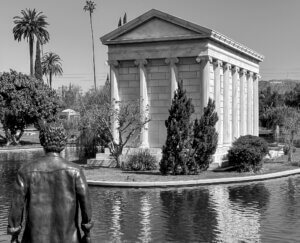
Visiting such sites was something I had been doing with increasing frequency over the years. Now, I was wandering through my second celebrity cemetery in as many days, tracing the legacies of Hollywood’s most famous dead. I hadn’t gone there seeking morbidity. I came to recover in the California sun; to walk, to breathe, and to feel human again.
It was there, in the cemetery, that the realization dawned. Standing among memorials to other lives and losses, I realized that I wasn’t there simply to observe history or pay tribute, as I had assumed until then. I was there because of what these sites did for me. They helped me psychologically withstand a terminal illness in a way I had not been able to during a less serious health crisis and a divorce only a few years earlier, when anxiety had nearly overtaken me and could easily have ended the life I had built. And for a while, it did.
Dark tourism, the practice of traveling to locations associated with death, tragedy, and the seemingly macabre, has become a popular term, despite the practice itself existing for several millennia. For many, it conjures images of voyeurism and the exploitation of suffering. As a therapist, I had long questioned these sites and the motives for visiting them. Yet when I visited most of them, such as Ground Zero, the Paris Catacombs, or Alcatraz, I never experienced them in this way.
What I found instead was that when I entered these spaces with care and presence, something I always seemed to do, what I took from them was profound. I wasn’t just simply visiting places of tragedy. I was engaging in a process, one I now think of as reflective dark tourism. Unlike voyeuristic or curiosity-driven encounters with death, this approach is grounded in intention, reverence, and empathy, allowing these sites to function as mirrors rather than spectacles.
The significance of these visits was not always immediately apparent. Over time, I found that being a “reflective witness” to history’s darkest and most reverent sites revealed aspects of myself. This experience is not unlike Jung’s concept of the shadow, the parts of us we bury or hold subconsciously when they are not brought into conscious awareness. Dark tourism has the power to reveal the shadow and bring our fears into full awareness.
These deep emotional encounters are tagged and stored in the limbic system, a process that occurs when we witness events of intense emotion. In this way, these memories linger deeper within us. This is not unlike the overview effect astronauts describe when they look down at Earth and recognize how small and fragile we are. Psychedelic experiences, near-death experiences, and the loss of loved ones can also bring about similar shifts in a single moment.
In fact, the transformative ability of dark tourism has been described by Dr. Philip Stone, a leading academic in the field, as “mortality mediation.” He theorizes that dark tourism can function as a modern, secular equivalent of religious pilgrimage in its ability to prompt reflection on death and dying. These sites then become a memento mori, which translated from Latin means “remember that you must die.” The phrase dates back to ancient Rome and was later popularized in the Elizabethan and Victorian eras by Christians as a call to live with intention and strength. Something akin to what a healthy stoic might embody.
Healing After Visiting Dark Sites
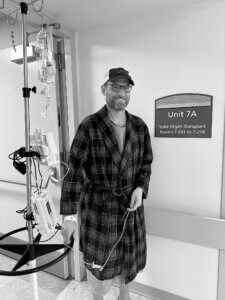
I was yellow. Fluid was building up throughout my body, including in my chest cavity, making every breath a painful effort. I was dying, and it was coming fast. Then the call came: a liver. At the hospital, I was told there would be a delay, but that it was still coming.
From my visits to dark sites, I often think in terms of history. During that delay, I reflected on Normandy, a site my son and I had visited a few years earlier. I remembered that the invasion had also been delayed due to weather. Two completely different circumstances, yet parallels my mind made in that moment. They had a delay. I had a delay. I didn’t feel so alone in my suffering.
Then, two days into it, a midnight call came. The liver fell through. A jolt of fear was met almost immediately by reframing. The troops who stormed the beach after the delay had a mission: get to the shore, cross it, climb the cliffs, and fight on. I saw another parallel. My mission was to get to that transplant and fight on. I was not going to let myself die. Yes, there was anxiety and thoughts of death, but there was no fear—only resolve to live.
The next call came less than two weeks later. I remember being rolled into the operating room in my wheelchair with a surprising sense of peace, aware that one of the most important chapters of my life was unfolding in real time. I was there, watching it happen, seeing it not as something to fear but as an adventure. Something to witness.
This appeared to be the culmination of my dark tourism experiences. I sensed that because I had entered sites of profound suffering, such as Auschwitz, Ground Zero, and others, with reverence and empathy, I was now carrying those memories with me. In an odd but deeply meaningful way, it felt as though those places, and the people they represent, were with me. The thought of them had given me strength. It allowed me to move through what should have been the darkest chapter of my life without fear.
In the weeks that followed, I often reflected on my time visiting sites of dark tourism. One experience that returned to me repeatedly was my visit to Parliament and the Churchill War Rooms. Recovery was painful, and there were moments when I questioned whether I should have simply let the illness take its course. Those thoughts never lasted long.
I thought about England during World War II, a time when the country was on its heels and fear was widespread. Then I thought about Winston Churchill and his speeches, words so powerful that they gave a nation the strength not only to defend itself, but to fight with relentless resolve. I often repeated to myself, “When you’re going through hell, keep going,” a quote commonly attributed to Churchill.
That thought was often the last one I held before pushing myself up out of my hospital bed or walking the halls when all I wanted to do was take a pill and lie still.
The Case For Reflective Dark Tourism
At Hollywood Forever Cemetery, I reflected not only on that visit, but on many of the dark tourism sites I had traveled to over the years. They had helped me through the darkest period of my life. I went to these places with intention, entering them with respect and compassion, and in return, they helped me heal. They also helped me process experiences I had never fully confronted before. It was then that I felt a responsibility to share this revelation with others. It was there that I decided to write a book about these experiences.
That decision marked a shift. I took my struggles with divorce, illness, and other forms of suffering and examined them through a phenomenological lens, drawing on my training as a therapist and academic to reflect on my experiences with dark tourism. What I found was that the mirror these sites offered allowed me not only to reflect on their suffering, or my own, but to examine parts of myself I had long avoided. In Jungian terms, it was an opportunity to encounter the shadow and begin the process of integration, what Jung described as making the unconscious conscious.
In Hiroshima, I reflected on my guilt as an American and on the resilience of a magnificent city. I recommitted myself to speaking up for peace in small ways, both during personal conflict and when I see tensions rising in the world. When I visited the site of Jesse James’s assassination, or stood at the Tower of London where Anne Boleyn was beheaded by her husband, Henry VIII, I reflected on betrayal. I thought about those who never received a second chance, and about the fact that I was still here and able to endure betrayal in my own life.
I also reflected on imprisonment and isolation, and on what people have done to survive such conditions. Each site offered a different reflection, a different lesson, and a different high-priority memory encoded by the brain, ready for use if and when a similar lesson is needed in my own life.
When I wrote my book, I intentionally avoided going deeply into the academic literature on dark tourism. I did not want my work to seem clinical or to have my experiences biased. Later, when I did explore the research, I found a growing body of literature describing the reflective and transformative potential of dark tourism. It was striking to see my personal experience echoed in that research.
When we find meaning in suffering, we touch on a concept so powerfully articulated by Viktor Frankl in Man’s Search for Meaning. During his imprisonment at Auschwitz, Frankl theorized that human beings can endure almost anything if they have meaning. Sometimes that meaning was simply to suffer with dignity, one of the few things that no one can take away if we choose it.
In that same sense, we can learn from the suffering of others. This may be one reason Frankl’s book has remained a bestseller for nearly eighty years. Dark tourism holds this same potential.
Reflective dark tourism can be especially meaningful when we stand at the site of tragedy itself. In many ways, such places are hallowed ground, not unlike sites of religious significance. When approached with deep reverence and empathy, these visits can foster healing at an existential level and remain available to us later, when we most need the lessons they offer.
In this respect, these sites can function as a form of vicarious post-traumatic growth, reflecting back our fears, insecurities, and past experiences in ways that allow for integration rather than avoidance. For me, this process has come full circle. I moved from being a reflective witness to living with greater intention and purpose, less driven by fear, and with a deeper appreciation for life. In a modern world that often feels as if it is on fire, that is something we can all be grateful to have.
References
Frankl, V. E. (2006). Man’s search for meaning (I. Lasch, Trans.). Beacon Press. (Original work published 1946)
Foley, M., & Lennon, J. J. (1996). JFK and dark tourism: A fascination with assassination. International Journal of Heritage Studies, 2(4), 198–211. https://doi.org/10.1080/13527259608722175
Jung, C. G. (1953). Psychology and religion: West and East (Vol. 11, Collected Works, R.F.C. Hull, Trans.). Princeton University Press.
LeDoux, J. (1996). The emotional brain: The mysterious underpinnings of emotional life. Simon & Schuster.
Stone, P. R. (2006). A dark tourism spectrum: Towards a typology of death and macabre-related tourist sites, attractions and exhibitions. Tourism: An International Interdisciplinary Journal, 54(2), 145–160.