Dr Charlotte Russell, Clinical Psychologist and Founder
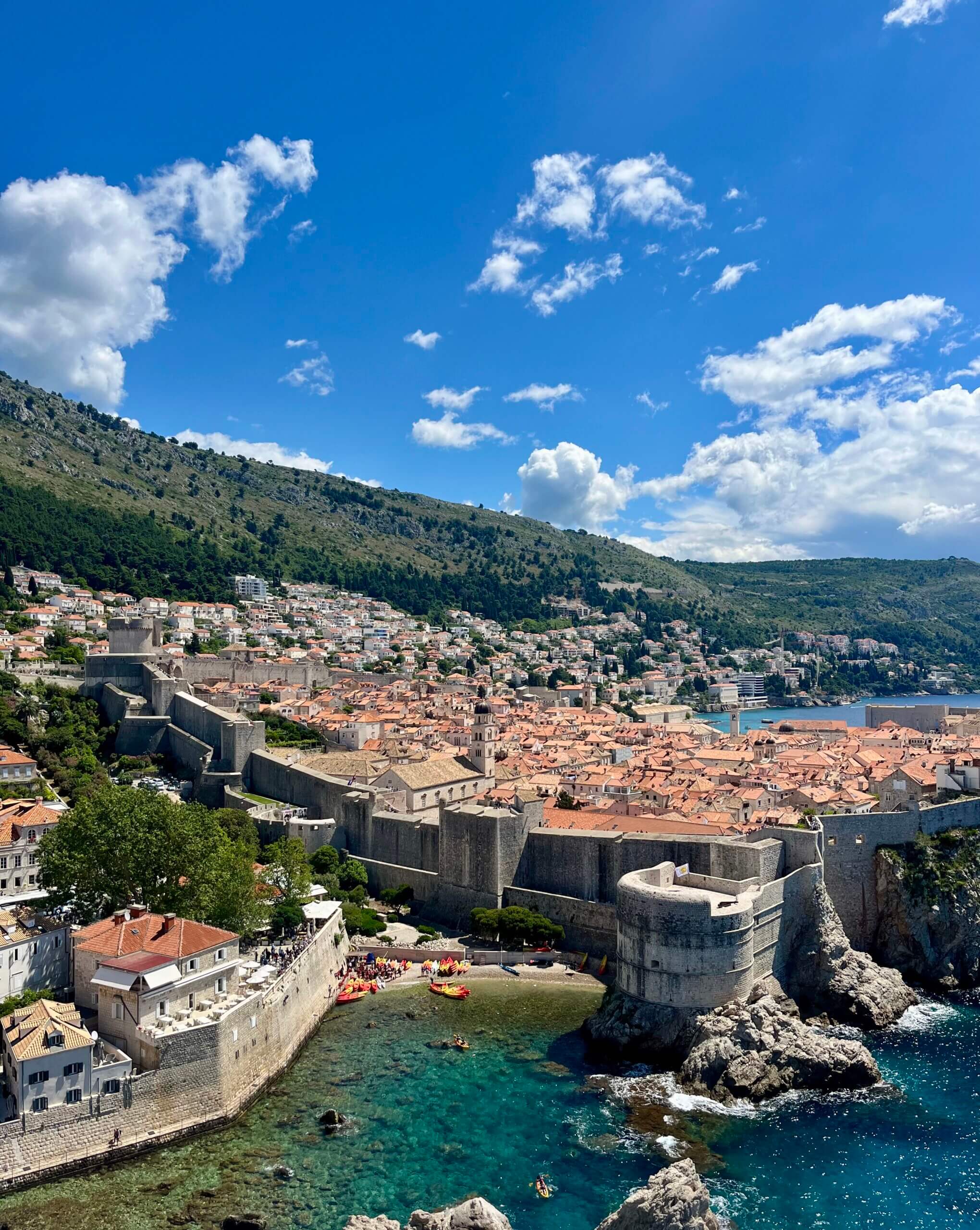
The psychological pull of visiting film and TV locations is substantial. We can see just by the numbers that people are spending a lot of money and time visiting the places they’ve seen on screen: A 2021 BFI report found that two‑thirds of tourists visiting the UK are influenced by film and TV locations, contributing £892.6 million in film‑related tourism in 2019. Locations like Alnwick Castle in Northumberland and Glenfinnan Viaduct in Scotland continue to draw Harry Potter fans in their thousands. Meanwhile Highclere Castle remains a global magnet for Downton Abbey devotees. It’s not just the UK, research indicates that since the airing of Game of Thrones, Dubrovnik has seen around almost 60,000 additional tourist overnight stays per year (Depken et al., 2020). This has elevated an already busy tourist city into a bucket list destination.
Whilst I haven’t purposely travelled with screen locations in mind, as a psychologist I can understand the psychological appeal. Stories can be incredibly meaningful for us, particularly when we find a character or theme that we connect with. So it makes sense to me that people would want to maintain or deepen this connection by visiting a place and experiencing it for themselves. Perhaps it’s not always that deep though. It is equally feasible that for some, the draw could be rather more superficial, with the screen scenery becoming a place to have a laugh or take some funny photos for social media.
In this piece we’re going to dive in to the psychology of screen tourism, including the deep, and not-so-deep psychological motivations behind this phenomenon.
Psychological motivations for screen tourism
Narrative transportation
Narrative transportation describes the experience of becoming very absorbed in a story. We feel what the characters feel, move through the landscapes as if we’ve walked them ourselves, and form emotional memories of places we’ve never physically been. Psychologically, this creates a sense of familiarity and attachment that can later translate into real‑world travel. Visiting a filming location becomes a way of stepping back into a story that once held us, grounding an imagined experience in physical space.
The Lord of the Rings reshaped New Zealand’s tourism identity. For those who love the films, the dramatic landscapes of New Zealand are Middle‑earth made real. After years of inhabiting the story in their imagination, visiting Hobbiton or the volcanic slopes of Mordor becomes a way of completing the emotional journey the films began. The landscapes feel familiar long before arrival, and the trip becomes less about sightseeing and more about returning to a world that once felt vividly alive.
Parasocial attachment
Parasocial attachment describes the one‑sided emotional relationships we form with fictional characters or public figures; relationships that feel intimate and meaningful despite existing entirely in our imagination. These bonds often develop over long periods of repeated exposure: years spent reading a book series, growing up alongside characters, or returning to a film world that feels like a psychological home. What makes parasocial attachment so powerful is that it activates many of the same emotional and neural systems as real relationships: empathy, care, identification, even a sense of shared history. In the context of film tourism, this means that visiting a filming location becomes more than sightseeing. It becomes a way of deepening a relationship that has shaped someone’s inner world.
Few stories illustrate parasocial attachment as vividly as Harry Potter. For many readers and viewers, the connection to the characters is unusually enduring; forged in childhood, reinforced through adolescence, and carried into adulthood with a sense of loyalty that borders on the familial. Fans don’t just like Harry, Hermione, or Hagrid; they feel as though they know them. This emotional closeness makes places like Alnwick Castle, Durham Cathedral, or the Glenfinnan Viaduct feel almost sacred. Standing where the characters “stood” becomes a way of honouring a relationship that has offered comfort, identity, and belonging over many years.
Destination image
Destination image refers to the blend of beliefs, emotions, and expectations we hold about a place before we ever set foot there. Films are unusually powerful in shaping these impressions because they offer not just visual information but an emotional frame: how a place feels, what it represents, and who we might become there. Psychologically, destination image is formed through both cognitive cues (the scenery, the climate, the culture) and affective cues (the mood, the music, the emotional arc of the characters). When a film presents a destination as liberating, romantic, or transformative, viewers begin to associate the place with those same emotional possibilities and travel becomes a way of seeking that feeling in real life.
Shirley Valentine is a classic example of how a film can reshape the emotional meaning of a destination, and it was quietly pioneering in the way it portrayed solo female travel long before it became a mainstream idea. The Greece depicted in the film isn’t just sun‑drenched and beautiful; it’s a place of awakening, possibility, and self‑rediscovery.
For many viewers, particularly women who saw the film during its original release in 1989, Greece became symbolically tied to the idea of stepping out of one’s routine and reconnecting with a more expansive version of oneself. Over the years, UK and US travel journalists have described the film as a “quiet catalyst” for women travelling alone to Greece in the 1990s and early 2000s. It’s often mentioned in reflective pieces about women reclaiming independence through travel. This tells us that screen tourism is perhaps not as new as we may think it is.

Identity exploration
Identity exploration is the process of trying out different versions of ourselves not in a dramatic, life‑altering way, but in the quiet, curious sense of wondering who we might become in a different setting. Travel has always been a natural container for this, but film intensifies the effect. When we watch a character step into a new landscape and feel themselves shift, we often project our own possibilities onto that journey. Psychologically, this is a form of self‑expansion: the idea that new environments, relationships, and experiences can stretch the boundaries of who we believe ourselves to be.
Few films have shaped identity‑driven travel as strongly as Eat Pray Love. For many viewers, the story wasn’t just about Italy, India, or Bali; it was about the possibility of stepping out of a life that felt too small and into one that felt more aligned, more expansive, more honest. The destinations became symbolic stages for different facets of identity; pleasure, spirituality, and balance, and audiences began to imagine themselves moving through those same arcs. The surge in travel to Bali after the film’s release wasn’t simply about beaches or yoga retreats; it was about the hope that a different version of oneself might be waiting there. Visiting Ubud or the rice terraces became, for many, a way of trying on a new identity in a place that had already held that transformation for someone else.

Not all film tourism is deep: Superficial motivations
While many travellers are drawn to film locations for emotional, psychological, or identity‑driven reasons, it’s equally true that not every visit carries that depth. Film tourism sits on a spectrum. At one end are people seeking connection, nostalgia, or transformation; at the other are those who simply want a good photo, a recognisable backdrop, or a moment of proximity to something famous.
These different motivations are likely to produce different behaviours. When the pull is superficial, the relationship to the place is often more extractive than appreciative. This is where we see the more problematic side of film tourism: visitors climbing on fragile structures for a selfie, leaving graffiti, crowding residential streets, or treating a living city as though it were a theme park. The desire isn’t to inhabit the story, but to collect it; a quick hit of novelty rather than a meaningful encounter.
To give some example, in places like Skye in Scotland, where Star Wars: The Last Jedi was filmed, visitors have been known to climb on fragile rock formations or ignore safety barriers simply to capture a recognisable Instagram shot. Dubrovnik’s Jesuit Staircase; the site of the Game of Thrones “shame” scene, has seen crowds re‑enacting the moment loudly, blocking access to a functioning church and disrupting local life. And in London’s Notting Hill, the famous blue door has become a magnet for selfie‑hunters who sit on the private doorstep, leave graffiti, or queue for a photo before immediately moving on. These examples highlight a different end of the spectrum: film tourism driven less by connection or meaning, and more by novelty, visibility, or the desire to collect a moment rather than inhabit a place.
Responsible film tourism
If film tourism sits on a spectrum, from deeply meaningful to purely superficial, then responsible travel is what helps keep that spectrum sustainable. Visiting a filming location is, at its best, an act of appreciation: a way of honouring the story, the place, and the people who live there. But it also requires an awareness that these locations are not sets; they are communities, ecosystems, and cultural spaces with their own rhythms and needs. Responsible film tourism means pausing long enough to understand the context, respecting boundaries, and recognising that our presence has an impact. It’s choosing to engage with a place rather than consume it. Whether someone is travelling because a story moved them or simply because a scene went viral, the principle is the same: treat the location with the same care you would hope others would show your own neighbourhood. When visitors do this, film tourism becomes a force for connection rather than disruption, a way of letting stories enrich the world rather than overwhelm it.
Conclusion
Film tourism is often spoken about as if it were a single behaviour, but in reality it’s a tapestry of motivations. For some travellers, visiting a filming location is a way of stepping back into a story that once held them, completing an emotional arc or exploring a version of themselves that feels just out of reach. For others, it’s simply a moment of novelty or recognition, a chance to stand where something famous happened and capture it quickly before moving on. What matters is not ranking these motivations, but recognising their diversity and understanding the impact they have on the places and people who host them. When we approach film locations with curiosity, respect, and a sense of connection, screen‑inspired travel becomes more than a trend. It becomes a reminder of the quiet power stories hold in shaping how we see the world, and how we move through it.
References
Depken, C. A., II, Globan, T., & Kožić, I. (2020). Television‑induced tourism: Evidence from Croatia. Atlantic Economic Journal, 48(2), 253–262. https://doi.org/10.1007/s11293-020-09673-3