By Mirna Plotkowski, MA Psychology Graduate and Guest Contributor
I used to hate the question “Where are you from?”. Not because I was ashamed of where I came from, but because the answer kept changing.
I was born in Yugoslavia. By the time I was fourteen, Yugoslavia no longer existed. Then I was from Croatia. A country that not many people knew much about: so there I was in Los Angeles, having a drink with a handsome guy, trying to look mysterious and sophisticated, when the question inevitably came.
“Where are you from?”
At first, I thought it was my name giving me away. Then I blamed my accent, which I spent years trying to soften. Then someone told me I looked “exotic,” something that had never crossed my mind growing up in Rijeka.
“So… Croatia?”
“Where is that?”
“Oh, I heard of it. Isn’t it dangerous there?”
The war had ended years before. Two months ago, someone still asked me if it was dangerous.
“Can we talk about my fabulous shoes instead?”
So yes, I moved from Croatia to Los Angeles in my twenties and later to Belize, Armenia, and Bolivia. Somewhere along the way, I stopped asking myself where I was from and began asking a different question.
“Where do I feel most myself?”
Los Angeles: Possibility
In the beginning, I missed Rijeka desperately.
Speaking English all day exhausted me. The muscles around my mouth hurt. I missed jokes. Humor. Cultural references. I missed speaking with the precision my educated Croatian allowed me.
Years later, I discovered Roy Baumeister and Mark Leary’s (1995) work on belongingness. They argued that belonging is not merely a preference but a fundamental human need. Looking back, I wasn’t missing geography so much as I was missing effortless belonging.
Over time, Los Angeles became my city.
Nobody questioned my career choices, friendship choices, relationship choices, or shoe choices.
I embraced Korean scrubs, Thai massages, hot yoga, fish tacos with too much lime, Hollywood Bowl summers, drag queens, and the glorious possibility of reinventing myself.
Dan McAdams (2001) later gave me language for what was happening. Identity, he wrote, is an evolving life story. Los Angeles was where I learned that becoming American didn’t require becoming less Croatian.
Identity could expand. Not replace.

Belize: Breath
Belize taught me something entirely different.
After Los Angeles, Belmopan felt like a village.
Because it was even though it was the capital city.
I fought mosquitoes with my organic California philosophy—garlic, herbal sprays, African soap somebody swore prevented malaria. Eventually, I surrendered to DEET.
The mosquitoes won.
I also discovered that dancing all night at a diplomatic party apparently becomes community gossip for an entire year.
Good to know.
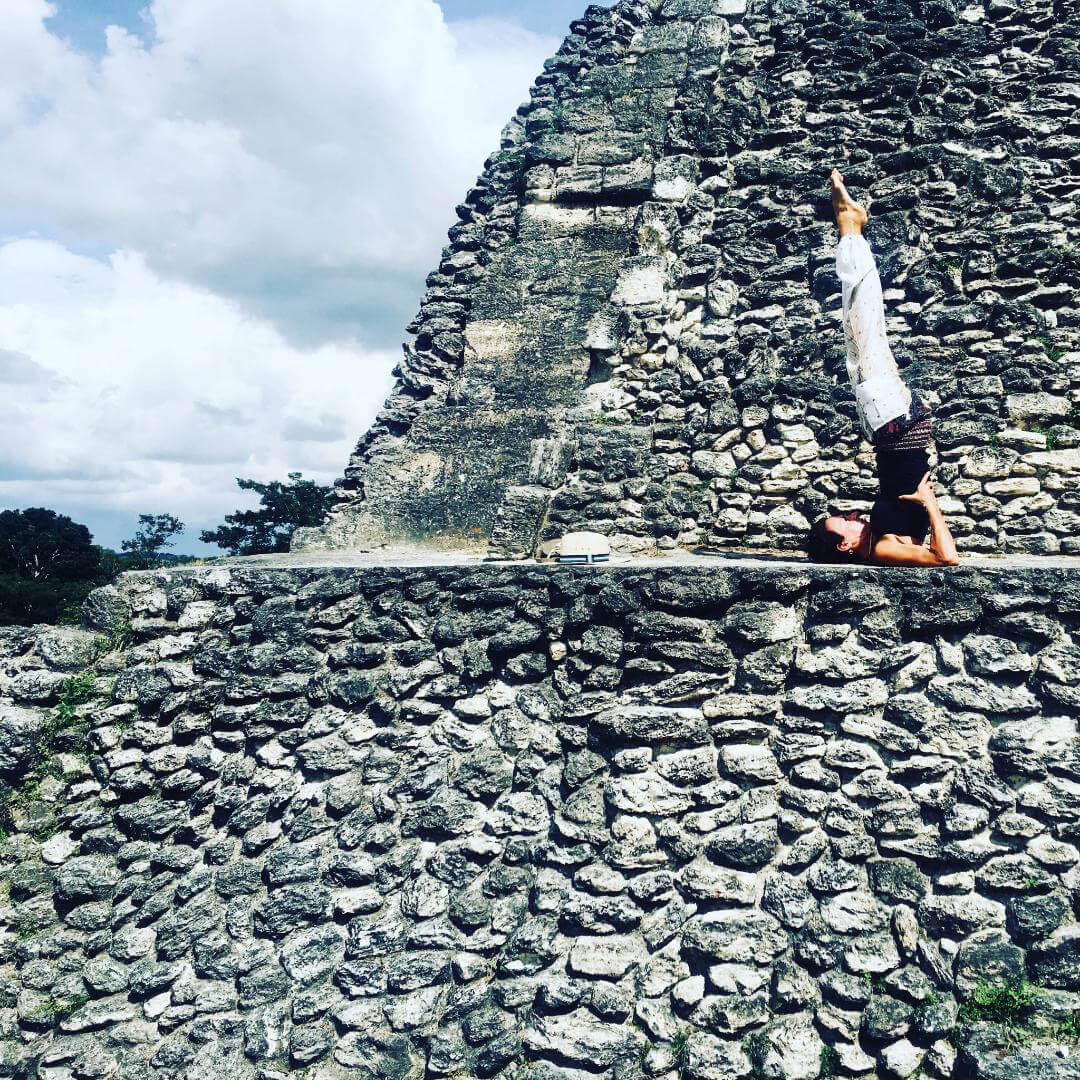
I became a yoga instructor.
Not because I was particularly enlightened, but because somewhere between the jungle, the Caribbean, fried jacks, giant avocados, and howler monkeys, I learned how to connect my breath to my body.
Looking back, perhaps that chapter was never about work.
It was about slowing down.
Armenia: Understanding
Armenia surprised me.
I expected familiarity. Former Soviet Union. Collectivist culture.
Surely I’d fit right in. Well, No.
Everybody smoked. A lawyer cleaned houses. The opera stayed open during COVID. Nothing worked the way I expected.
And yet, I understood the “snađi se, druže” (“Do what you’ve got to do”) mentality immediately.
My American colleagues would become outraged when someone charged us $14 instead of $4.
I laughed.
Not because it was right, but because I understood survival.
I understood adaptation. I understood history.
Dan McAdams suggests that we create continuity through the stories we tell ourselves. Looking back, Armenia became one of those chapters I understood much better after leaving.
And I discovered that loving a place and understanding a place are not always the same thing.
Bolivia: Color
Then came Bolivia.
Unlike Armenia, I was excited.
What I had not researched sufficiently was what living at 3,700 meters in La Paz would do to my body.
And nobody warned me about High-Altitude Flatus Expulsion. HAFE.
Yes, it’s real. And yes, it is exactly what it sounds like.
Altitude has a remarkable way of humbling one’s digestive system and destroying any illusion of elegance.
Alcohol was out of the question for months.
Sleep became a negotiation.
But then there were the cholitas.
Everywhere.
As caseritas.
Driving trufis.
Hiking with llamas.
Appearing from behind rocks and bushes in magnificent polleras like colorful flowers scattered across the Andes.
I became fascinated by the history of Indigenous women reclaiming pride and power through those skirts.
Eventually, after many conversations about respect and appropriation, I bought a real pollera.
Not a costume.
Not a souvenir.
A real skirt.
The designer was delighted.
Apparently delighted enough that I somehow ended up on Bolivian television.
My aunt, who was a seamstress from Rijeka, would have found the whole thing hilarious.

And perhaps I was reclaiming something too.
At nearly fifty, I returned to graduate school to become a mental health counselor.
Dan McAdams (2001) writes that midlife often brings questions of generativity and purpose. I smiled when I read that.
Apparently, I wasn’t lost.
I was still writing.
Bolivia was in chaos.
Traffic that made no sense and somehow worked.
No high heels. The sidewalks were having none of that.
Gas lines that consumed entire afternoons.
Food I adored and food I politely respected from a distance.
Colors spilled out of markets and festivals.
Textiles seemed brighter than anywhere I had ever lived.
Even protests felt like parades.
Life itself seemed permanently set to maximum volume.
And then Murphy, our Gordon Setter, died. The grief was profound. It is impossible to explain to anyone who has never loved a dog like family.
But Bolivia also brought Aisha, our Bolivian mutt princess, who slowly taught us how to smile again.
Family therapist Pauline Boss (1999, 2006) calls certain experiences ambiguous losses. Her work focused on missing loved ones, but one of her most beautiful ideas is identity reconstruction—asking, “Who am I now?” She also teaches us to tolerate ambivalence.
That may be what moving countries repeatedly taught me.
I could love Bolivia and be relieved not to sit in gas lines anymore.
I could miss Croatia and not appreciate the required gossip from neighbours.
And I could adore Los Angeles, enthusiastically trying to convince everyone that it represented America, while conveniently forgetting to mention that some parts of the country might disagree.
I could feel grateful and heartbroken simultaneously.
Both-and.
Not either-or.
Home Can Be Plural
For years, I worried that something was wrong with me.
Then I encountered the work of Pollock and Van Reken (2017) and later Moore and Barker (2012), who described the identities of people living between cultures. Some now refer to adults like us as Third Culture Adults.
I laughed.
Apparently, there was a name for people who answer “Where are you from?” with a pause, a sigh, and a two-minute explanation.
Home, they suggested, can become plural.
That idea felt less like a theory and more like permission. Permission to stop searching for a single answer.
And perhaps that explained why I could be from Rijeka and Los Angeles, miss Belize, smile at Armenian wine, and still long for the impossible colors of Bolivia.
Environmental psychologists Altman and Low (1992) described place attachment as the emotional bonds people form with places.
I smiled again.
Because home, I realized, lives in sensory memories.
In the smell of salt carried by the Adriatic that raised me.
In the tall palms and sunsets over the Pacific that taught me possibility.
In the warm Caribbean breeze, among giant avocados and fried jacks, I learned to slow down and breathe.
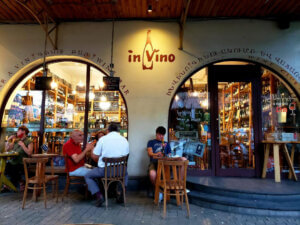
In Armenian wine, eggplant rolls stuffed with walnuts, and enthusiastic conversations about being both the oldest and newest wine country.
In polleras, hummingbirds, and the impossible colors of Bolivia.
And perhaps most of all, in the many versions of myself that were born in each of those places.
Perhaps Baumeister and Leary (1995) were right.
Belonging is fundamental.
But belonging is larger than I once imagined.
We may belong not only to people, but also to coastlines.
To the mountain air.
To favorite meals.
To songs.
To colors.
To stories.
And maybe, if we are lucky, to several places at once.
Years later, Dan McAdams (2001) would remind me that identity itself is an evolving story.
I smiled when I read that.
Because my life had never really been a collection of disconnected moves.
It had always been one story.
A Croatian girl.
A young immigrant in Los Angeles.
An expat in Belize.
A wine enthusiast in Armenia.
A woman in Bolivia, laughing about HAFE, crying over her Gordon Setter, and returning to graduate school in her forties.
Different chapters.
One story.
And perhaps highly mobile people spend so many years trying to answer the question “Where are you from?” that eventually they discover a better one.
Where do I feel most myself?
These days, I smile when people ask.
Sometimes I say Croatia.
Sometimes Croatian American.
Sometimes Rijeka and Los Angeles.
All are true.
But if I answer honestly, I would say this:
I carry the Adriatic that raised me.
The Pacific that taught me possibility.
The Caribbean that taught me to breathe.
Armenian wine and walnut-filled eggplant rolls.
Polleras, hummingbirds, and the impossible colors of Bolivia.
And pieces of many versions of myself.
Home isn’t one place anymore.
Perhaps home is where I feel most myself. Preferably somewhere that appreciates fabulous shoes.
About the author: Mirna Plotkowski holds a B.A. in Psychology from the University of Croatia and an M.A. in Industrial-Organizational Psychology from The Chicago School. She is currently completing her M.A. in Clinical Mental Health Counseling at Walden University.
Having lived in Croatia, the United States, Belize, Armenia, and Bolivia, Mirna is passionate about exploring identity, belonging, and the psychological experience of living between cultures. Through her writing and future clinical work, she hopes to support immigrants, expatriates, diplomatic families, digital nomads, and other globally mobile adults as they navigate life’s transitions and create a sense of home across borders.

References
Altman, I., & Low, S. M. (Eds.). (1992). Place attachment. New York, NY: Plenum Press.
Book information:
https://link.springer.com/book/10.1007/978-1-4684-8753-4
Baumeister, R. F., & Leary, M. R. (1995). The need to belong: Desire for interpersonal attachments as a fundamental human motivation. Psychological Bulletin, 117(3), 497–529.
Free PDF:
https://persweb.wabash.edu/facstaff/hortonr/articles%20for%20class/baumeister%20and%20leary.pdf
Boss, P. (1999). Ambiguous loss: Learning to live with unresolved grief. Cambridge, MA: Harvard University Press.
Harvard University Press:
https://www.hup.harvard.edu/books/9780674003811
Author website:
https://www.ambiguousloss.com/
McAdams, D. P. (2001). The psychology of life stories. Review of General Psychology, 5(2), 100–122.
DOI:
https://doi.org/10.1037/1089-2680.5.2.100
Moore, A. M., & Barker, G. G. (2012). Confused or multicultural: Third culture individuals’ cultural identity. International Journal of Intercultural Relations, 36(4), 553–562.DOI:
https://doi.org/10.1016/j.ijintrel.2011.11.002
Pollock, D. C., Van Reken, R. E., & Pollock, M. V. (2017). Third culture kids: Growing up among worlds (3rd ed.). Boston, MA: Nicholas Brealey.
Publisher:
https://www.thirdculturekids.com/product/third-culture-kids-3rd-edition/