


By Dr Nicola Cann, Sleep Psychologist & Regular Contributor
Few cities in Southeast Asia balance history and modern life as effortlessly as George Town. Chinese clan houses, British colonial buildings, Indian temples and sleek coffee shops sit side by side, creating a city that somehow feels both historic and constantly evolving.
Just a few hours north of Kuala Lumpur or Singapore, Penang State occupies part of Malaysia’s west coast and Penang Island, where most visitors base themselves in George Town. Awarded UNESCO World Heritage status in 2008, George Town is a beautiful mixture of revived historic shophouses, grand colonial buildings, and stylish cafes.
This remarkable mix is no accident. Sitting on the Strait of Malacca, one of the world’s busiest maritime trade routes, Penang grew into an important trading port where merchants from China, India, the Middle East and Europe exchanged not only goods, but ideas, religions and traditions. Those influences remain woven into the city’s architecture, food and daily life.
Beyond George Town lie beach resorts, hectic Malay towns, and jungles with pristine beaches, but it is the city’s layered history and extraordinary food culture that draw most people here. I’ve had some of the best meals of my life in this part of Malaysia, and visited some of the most unusual museums.
Planning your trip
Penang is close enough to Kuala Lumpur and Singapore that many people only visit for a long weekend. While that’s enough time to experience the highlights, staying a little longer changes your perspective. Once you’ve ticked off the famous sights, you’ll have time to explore different neighbourhoods and corners of the island that many visitors never reach.
If your visit is short, stay within George Town’s heritage centre. From here everything is walkable, and many of the beautifully restored shophouses have been converted into boutique hotels. If you have a little longer, consider spending a few nights outside the UNESCO zone, where everyday life unfolds at a slower pace.
Wander
George Town is the oldest settlement of Penang, with a rich cultural heritage dating back centuries. Becoming a UNESCO World Heritage Site in 2008 enabled the city to invest in restoration of many of its old shophouses, temples, and mosques. The UNESCO zone is small enough to wander around on foot, or you can take one of the colourful trishaws with their music blaring. You’ll see a beautiful and intricate range of Peranakan and colonial architecture, with winding streets full of colourful shophouses.
It’s worth wandering beyond the heritage centre if you have the time. Away from the crowds you’ll find generations-old shophouses where Penangites continue practising traditional crafts, from rattan weaving and wood carving to hand-painted signwriting. These quieter streets reveal that George Town is not simply a preserved historic district, but a living city where old trades continue to exist alongside modern businesses.
Eat
No guide to Penang would be complete without talking about the food.
Start your day with coffee and pastries at one of the many bakeries. My last visit to Penang was ten days long. I visited a different patisserie every morning and still barely scratched the surface. I highly recommend Narrow Marrow for great coffee, The Maker for the excellent pastries, and China House for an astonishing array of cakes.

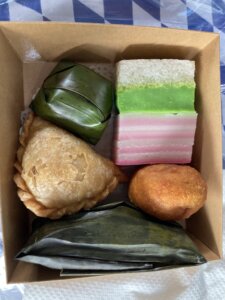
For lunch and dinner you can get any kind of dish you’re craving. Whether that’s a big bowl of noodles from a hawker, a fragrant Malay curry, or a chic fine dining experience.
A huge part of Penang’s culinary identity stems from Peranakan, or Baba-Nyonya cuisine. Developed over generations as Chinese migrants blended their cooking traditions with local Malay ingredients and techniques, it reflects the multicultural history that defines George Town itself. Rich spices, coconut milk, tamarind and fresh herbs feature heavily, creating dishes that balance sweet, sour, savoury and spicy flavours. Classic dishes you’ll find in Penang are versions of dishes you’ll see elsewhere in Asia – asam laksa, ayam pongteh, ayam buah keluak, otak-otak, and colourful kueh.
For hawkers, Chulia Street and Kimberley Street are reliable favourites, or just stop at any roadside stall you like the look of. For restaurant meals, some of my favourites include Plant a Seed for mind-blowing vegan Japanese food, Sri Ananda Bahwan for an Indian feast, and Kebayah for Peranakan fine dining.
If you’re looking for a lively place for cocktails after dinner, Love Lane is a hotspot for nightlife. Once home to the mistresses of wealthy Chinese merchants, it is now lined with lively bars that stay busy into the small hours.
If you still have room afterwards, stop off at an ice-cream parlour for a sweet treat on the way back to your accommodation. Glace Artisans and Ciao Gelato are both excellent.
My main advice on food is simple: don’t overthink it. The amount of choice can be overwhelming. You can find yourself comparing several restaurants all with hundreds of five-star Google reviews. In the end it doesn’t really matter. I can confidently say that anywhere you eat will be superb.
Enjoy the Quirky Museums
George Town’s museums reflect the city’s eclectic personality. Steeped in history, but not afraid to have fun.
A typical starting point is the iconic Cheong Fatt Tze Mansion. Also known as the Blue Mansion, this carefully restored Chinese mansion is now a museum and hotel which boasts a vast array of artefacts and furniture, giving a glimpse into the lives of Penang’s wealthiest Chinese elite during the late nineteenth century.
As beautiful as the Blue Mansion is, if you want a little more fun, and an insight into the Malay sense of humour, you should head to my favourite, the Ghost Museum. Each room is dedicated to a ghost tale from around Asia (although there are deviations from this theme – don’t miss the zombie zone on the top level). The museum helpfully provides costume boxes and tips on how to create the most memorable selfie with your chosen ghost. It’s silly, but also offers an insight into the folk tales generations of Malaysian children grew up hearing.
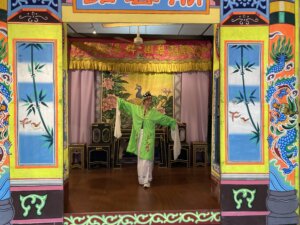
If that hasn’t satisfied your appetite for dressing up, continue on to the Teochew Puppet and Opera House on Armenian Street. Here you can discover the rich heritage of this Chinese art form through interactive exhibits, historic costumes, and traditional puppet performances. If you’re lucky you’ll also get to have your photo taken wearing one of the elaborate traditional costumes.

For a more traditional museum experience, visit the tiny Sun Yat Sen Museum. Housed in the former headquarters of Chinese revolutionary leader Sun Yat Sen, it tells the story of the significant role Penang played in the events leading to China’s 1911 revolution. It is a reminder that George Town is much more than a tourist destination.
Soak Up the Art
Street art has become one of George Town’s defining features. What originally began in 2009 was taken up a notch in 2012 when the city invited Lithuanian artist Ernest Zacharevic to create some now iconic murals. Today you’ll see tourists queuing up to pose with these artworks that incorporate 3D elements like bicycles and chairs. Whilst the older murals are fading, new ones are appearing constantly. You’ll find various guides but I think it’s far more fun to create your own ‘scavenger hunt’ and see how many you can spot.
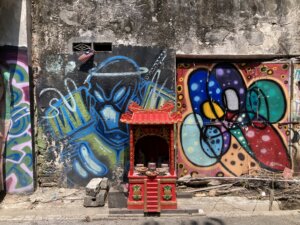
Aside from the murals, you can also find many tiny concrete people hidden around the city. Installed for the 2024 George Town Festival by Spanish artist Isaac Cordal, these figures are 15–20 centimetres tall and can be seen perching on windowsills, or on the corners of shophouses around the city. These figures are less well known than the iconic murals, so finding them feels all the more satisfying.
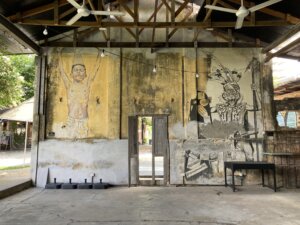
For exhibitions by local artists, head to Hin Bus Depot. At weekends there are also craft markets, live music and food stalls.
Visit the Clan Jetties
For a glimpse into the Chinese history of George Town, head to the Clan Jetties. Originally built by Chinese migrant traders who would load goods and moor their sampans here, these jetties have evolved into an established district, housing businesses and communities. All seven jetties are open to visitors. Wander down bustling Chew Jetty for souvenir shopping, or meander through the narrow walkways of Tan, Lee or Yeoh Jetties for a more residential experience.
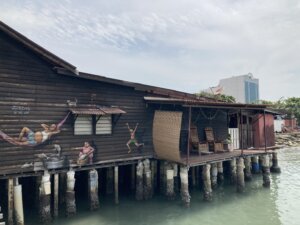
Just remember that these jetties are local people’s homes, so be respectful when exploring.
Temples, Temples and More Temples
In Penang you’ll find temples and shrines everywhere you go. The variety of religions represented reflects the diversity of the inhabitants. You’ll easily see Chinese, Hindu and Muslim temples if you simply wander for an hour or two in the UNESCO zone.
If you need some respite from the crowds, head to Hean Boo Thean, or Golden Floating Temple. Built in 1972 it’s one of the newest temples you’ll see in George Town. It’s near the Clan Jetties but somehow is largely overlooked by tourists, so you can wander in peace. The temple has pagodas built over the water where you can sit in the shade and look back over the Jetties and the Strait of Malacca.
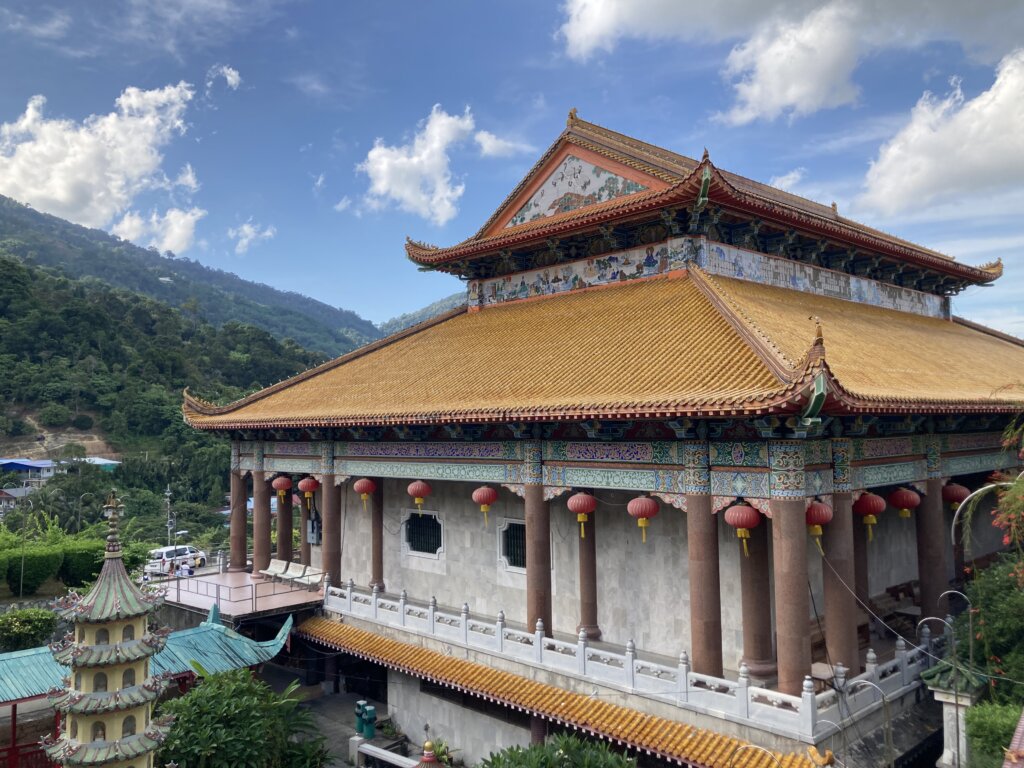
If you have time to head out of the centre of George Town, you’ll find the vast Kek Lok Si Buddhist temple. One of the largest Buddhist temples in Southeast Asia. Around a 30-minute drive out of town you’ll be rewarded with a sprawling complex of temples, pagodas and gardens, laid out over several levels. It’s in an otherwise scruffy part of town but the nearby De View Hotel has a rooftop bar where you can enjoy a cold drink and watch the sunset over the temple complex.
Take in the Views from Penang Hill
Penang Hill was a popular retreat for the British during Penang’s colonial period, and you can still catch glimpses of the classic black and white colonial bungalows amongst the trees as you ride the funicular up the hill. It’s a tourist hotspot so there is a mishmash of activities to meet everyone’s needs. At the top of the hill is a sky deck with views of the city, a treetop walk through an eco-park, and a range of eateries.
Explore the jungle
If you’ve had enough of the tourists and are craving nature, Penang National Park is a one-hour bus ride away and worth the trip. The bus will drop you at the jetty where you can buy your park ticket and arrange for a boat to drop you off in the park and pick you up later.
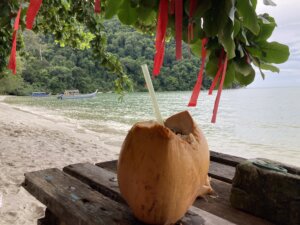
The National Park is a welcome respite from the busyness of George Town, with jungle paths leading to white sandy beaches. There are a range of walks depending on how adventurous you’re feeling. Monkey Beach is the most accessible and therefore a little busier – you can get dropped off here without doing any hiking. If you’re looking for something more secluded, Pantai Kerachut (Turtle Beach) is a 1.5 to 2-hour hike from the drop off point but is far more peaceful. Here you’ll also be able to visit the turtle sanctuary, a small conservation centre dedicated to protecting turtle hatchlings. I walked to Pantai Kerachut and then back to Monkey Beach, with enough time to enjoy a rum coconut in a hammock before being picked up by my boat.
More Than a Food Destination
Penang is often described as Malaysia’s food capital, and while that’s certainly true, reducing it to its cuisine misses the point. This is a place shaped by centuries of migration, trade and cultural exchange, where Chinese temples stand beside mosques, colonial mansions have become boutique hotels, and family recipes have survived for generations.
You’ll eat exceptionally well, but you’ll also find a city where history continues to shape everyday life. Perhaps that’s what makes Penang so compelling. It isn’t simply preserving its heritage; it’s still living it.