By Elise Dyer, Clinical Associate Psychologist and Regular Contributor
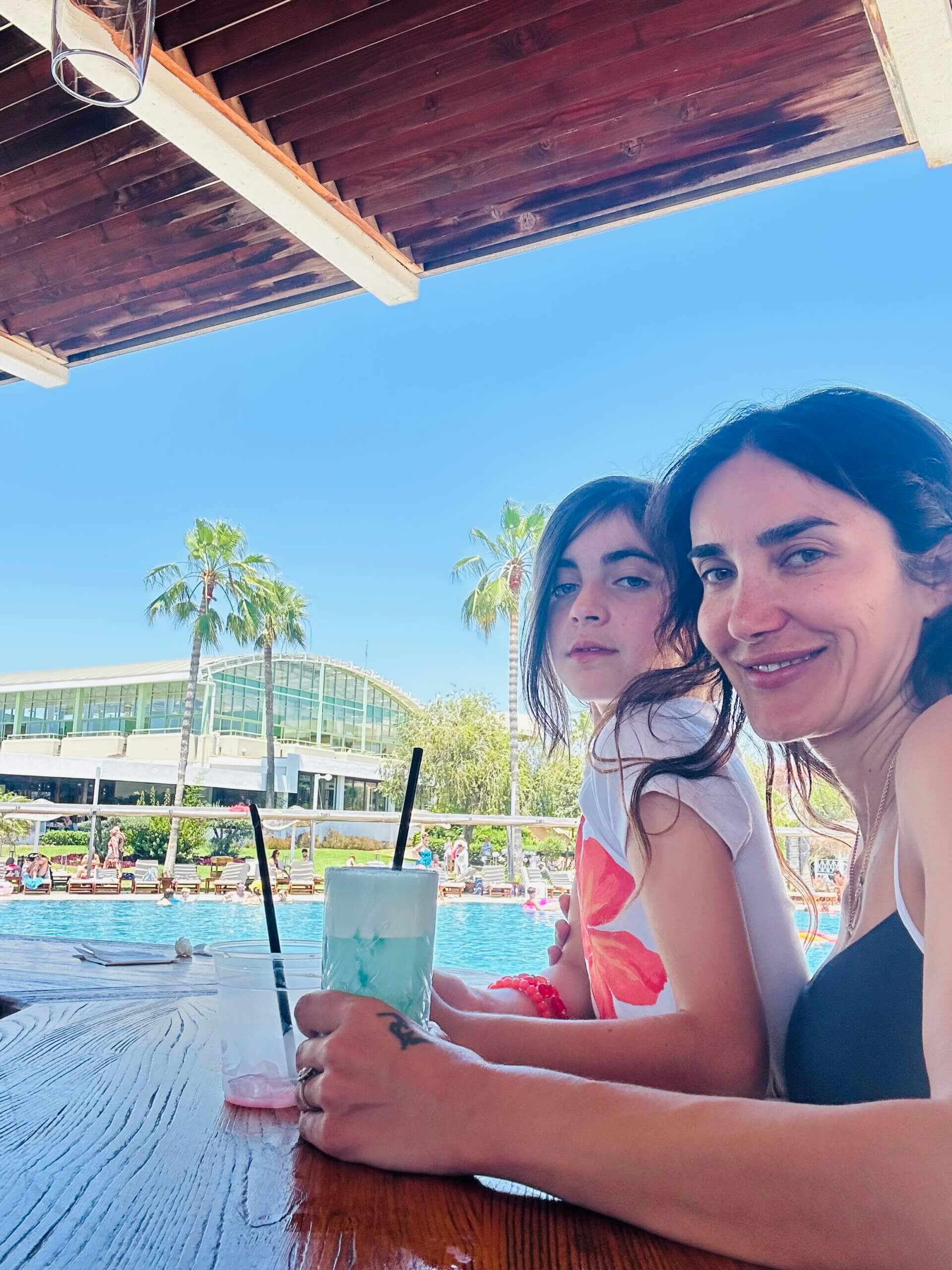
There is a moment that almost every single parent knows, even if they have never spoken it out loud. You are sitting by the pool, your child is happily splashing in the shallow end, and the sun is warm on your face. On paper, everything is perfect. And then you glance sideways at the couple next to you, quietly laughing together, and a feeling you cannot quite name settles into your chest.
It is not exactly sadness. It is not regret. It is something more complex than either of those things, and it arrives precisely when you thought you were doing brilliantly.
If this sounds familiar, you are not alone, and you are not doing anything wrong. The emotional landscape of holidaying as a single parent is rich, layered, and often contradictory. It can hold joy and grief in the same afternoon. Understanding that landscape, and having some psychological tools to navigate it, can make the difference between enduring a holiday and truly inhabiting one.
The Bittersweet Reality Nobody Prepares You For
Planning a trip as a single parent typically involves a great deal of practical preparation: passports, insurance, car seats, packing lists, keeping small people alive in airports. What far fewer of us prepare for is the emotional terrain that opens once we actually arrive.
Research on ambiguous loss, a concept developed by family therapist Pauline Boss, is useful here. Ambiguous loss refers to grief that lacks the social recognition of a conventional bereavement. When a relationship ends, or when family life does not look the way you imagined it would, you may find yourself mourning something that the world around you does not have a ceremony for. A week’s holiday, with its heightened sensory experience and unstructured time, has a way of bringing that grief temporarily to the surface.
This does not mean something has gone wrong. It means you are human.
What single parents often describe in forums and conversations is a specific type of emotional ambush: arriving at the destination with genuine excitement, then finding that certain moments, a crowded restaurant where everyone else seems to be part of a pair, a kids’ club pick-up when children run toward two waiting parents, a sunset that you have no one to silently share with, carry more weight than they expected. These moments are not reasons to stay home. They are invitations to understand yourself a little better, and to learn how to understand and work through complicated feelings without letting them define the whole experience.
The Identity Question on Holiday
One of the quieter challenges of single parent travel is that it strips away the routines that usually help us manage our sense of self. At home, you are busy. The rhythm of school runs, work, bath times, and meal prep leaves little space for existential reflection. On holiday, particularly in a resort or hotel setting where the main task is simply to rest, that white space can feel confronting.
We may feel disoriented by this space that we don’t usually have to reflect. At home you are a parent, a professional, a friend, a neighbour. On holiday, particularly alone with your child, you are something harder to categorise. Not a solo traveller. Not quite a family in the traditional sense. The gap between who you are and who you might have imagined being, on a sun lounger in Turkey or Spain, with a cocktail in hand, can feel unexpectedly wide.
The good news is that this disorientation, if you lean into it rather than away from it, is one of the most generative psychological experiences travel offers. Research consistently shows that travel enhances what psychologists call self-concept clarity, our ability to understand who we are. When we remove ourselves from our habitual environments and are forced to meet ourselves fresh, we tend to discover things about our own resilience, our preferences, and our capacity for pleasure that daily life keeps hidden.
What the Pool Bar Is Actually Asking of You
Let us return to that pool bar moment, because it deserves more than a passing mention.
When you notice couples around you and feel something shift inside you, what is happening psychologically is a process called social comparison. We are wired to measure our circumstances against those of the people around us, and it is a process that tends to intensify in unfamiliar settings. The human brain, when it lacks its usual reference points, reaches for whatever is available. What is available at a resort is usually a great many visible families and couples, providing ready material for comparison.
The cognitive reframe that tends to help most here is not a forced positive one. Telling yourself those couples are miserable really does not work, and frankly, many of them are probably perfectly happy, which is fine. What tends to work better is perspective broadening: gently widening the frame of reference. The couple next to you is not the measure of your holiday. The question is not “how does my experience compare to theirs?” but rather “what is my experience, on its own terms, actually like right now?”
When you sit with that question, the answers are often more interesting than comparison would suggest. You chose this destination. You planned this trip. You got yourself and your child here. The croissant you ate at breakfast without negotiating about anyone else’s dietary preferences was exactly the croissant you wanted. The book you have almost finished would have been abandoned at home. These are not consolation prizes. They are genuine pleasures, available to you specifically because of how your life is currently configured.
Permission to Feel Both Things at Once
One of the most liberating ideas in contemporary psychology is that emotional experience does not have to be tidy. We do not have to choose between enjoying our holiday and acknowledging that some aspects of it are hard. We do not have to perform gratitude to be allowed our more complicated feelings. We are allowed, in the words of the psychologist Tara Brach, to hold the full catastrophe.
A useful practice here is something drawn from acceptance and commitment therapy, often called emotional diffusion. Rather than trying to push away the feeling that arrives at the pool (“I shouldn’t feel like this, we’re having such a good holiday”), you simply notice it and name it with some gentle distance. “I’m noticing a feeling of loneliness.” “There’s some grief coming up right now.” Naming emotions in this way, rather than inhabiting them or fighting them, tends to reduce their intensity considerably. The feeling is there, you are not pretending otherwise, and then it passes through, leaving the sunset available again.
What Your Child Is Learning by Watching You
Here is something worth holding onto in those harder moments: your child is watching how you navigate emotional complexity, and what they see matters enormously.
Children whose parents model a healthy relationship with difficulty, who do not catastrophise it, hide it, or collapse under it, develop what psychologists call emotional regulation, the capacity to experience hard feelings without being overwhelmed by them. When you sit quietly with something difficult and then rally, when you have a low moment and then suggest a walk along the beach, when you are honest with an older child that you felt a little bit sad for a minute but that you are okay, you are doing something remarkable.
You are teaching them that life does not have to be perfect to be good. That feelings can be felt without becoming defining. That a family in any configuration is capable of joy, adventure, and genuine connection. These are not small lessons. They are the ones that tend to stay.
Reclaiming Pleasure as an Act of Self-Respect
There is a particular hesitation that many single parents carry onto aeroplanes with them, one that sits alongside the hand luggage and the travel adaptors: the sense that enjoying themselves too much is somehow suspect. That pleasure is a luxury they have not quite earned, or one that belongs to a version of their life that did not come to pass.
This needs to be gently but firmly dismantled.
Pleasure is not a reward for having an uncomplicated life. Rest is not a prize for not being a single parent. The cocktail by the pool, the chapter of the novel, the afternoon in the spa while your child is happily occupied at the kids’ club, these are not indulgences you must justify. They are acts of self-respect that make you a more present, more available, more genuinely joyful person to be around. Your child benefits from a parent who rests. Research on parental wellbeing consistently shows that a parent who is resourced, rather than depleted, is better able to be emotionally present in the moments that matter.
Enjoy the holiday. Not despite being a single parent. Fully, as the person you are.
The Moments You Will Carry Home
Ask any single parent a few years into their travelling life and they will tell you something consistent: the moments that last are not the perfect ones. They are the specific ones. The night your daughter danced to the live band and a stranger clapped along. The evening you stayed at the pool until the stars came out because nobody was waiting at home for dinner. The conversation you had over breakfast about something your child had been quietly thinking about for weeks, one that opened because for once, there was time.
These are not second-best versions of a holiday. They are the holiday, in full. And they belong entirely to you.