


This guide contains affiliate links. This means that if you book through the links provided this blog will receive a small commission at no cost to you.
Palermo is having a bit of a moment right now, and after visiting for the first time this year, I completely understand why. The city was exactly what I expected; energetic, alive, and full of character. In many ways it reminded me of Naples: a little chaotic at times, but with a real sense of life happening all around you.
It’s a wonderful place for foodies, with everything from tiny street stalls to elegant restaurants serving some of the best seafood I’ve had in Italy. Palermo also has a fascinating, layered history shaped by centuries of different cultures, and you can feel this blend everywhere — in the architecture, the markets, and even the food.

One of the best things about Palermo is that you can combine a city break with time by the sea. There are beautiful beaches less than an hour from the centre, which makes it easy to balance culture, food, and relaxation in one trip.
Things to do on a city break to Palermo
Exploring the historic centre
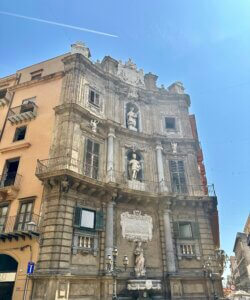
Exploring the historic centre of Palermo is an experience in itself. As you wander through the streets you’ll see a mix of architectural styles that reflect the city’s layered past — Arab, Norman, Baroque, and everything in between. The cathedral is one of the most striking examples of this blend, and Quattro Canti is a natural point to pause and take in the atmosphere.

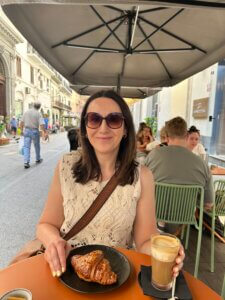
While you’re exploring, it feels almost obligatory to stop for a coffee, or later in the day an aperitivo. Palermo is a city where life unfolds in front of you and it’s lovely just to stop and take it all in.
The markets
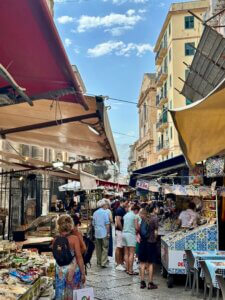
Palermo’s markets were one of the highlights of my trip. We visited both Capo and Ballarò, and each had its own atmosphere, but both were incredibly alive. I loved wandering around and just taking it all in — the colours, the noise, the calls from the vendors, and the constant movement that seems to define daily life here.
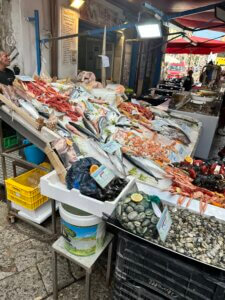
Despite eating swordfish for over 20 years, this was the first time I’d ever seen a whole swordfish simply sitting out on display. It was so fresh and such a striking sight that it stopped me in my tracks.
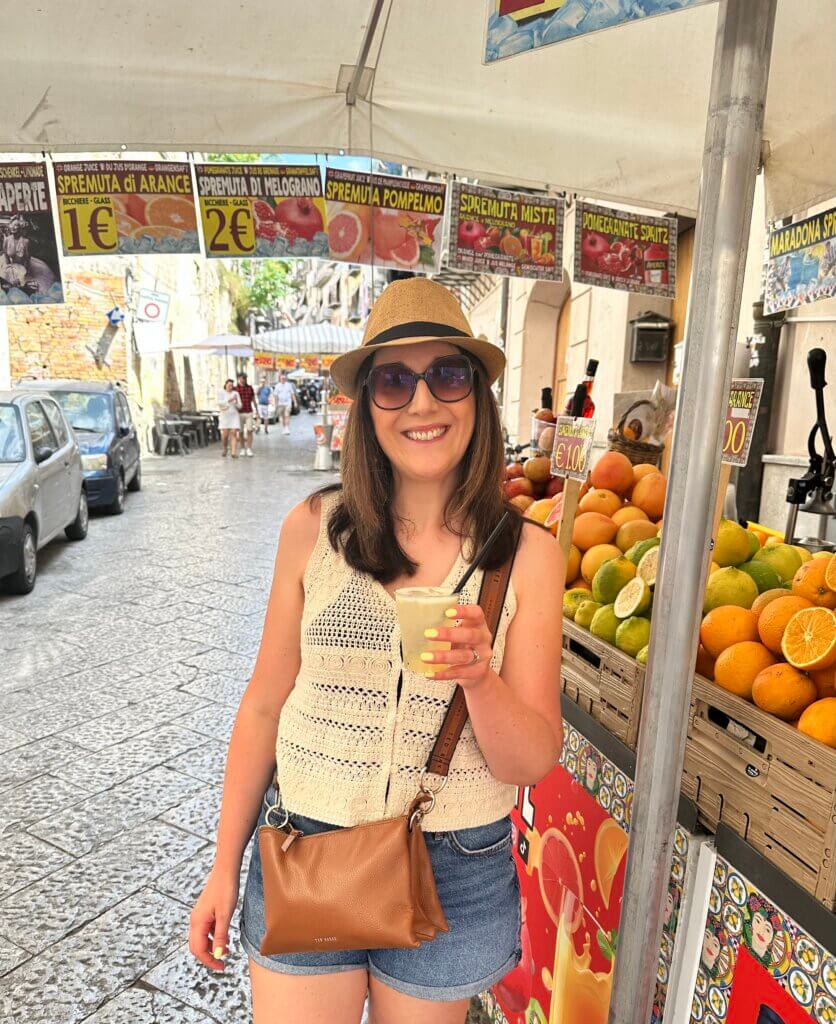
The freshly squeezed juices were also a must, especially on a warm day when you’ve been walking for a while.
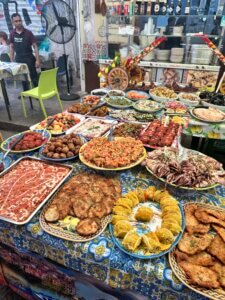
In the Ballarò market you’ll also find stalls where you can sit and order a plate of appetiser‑style dishes. We chose fried fish, aubergine salad, calamari, artichokes, and of course arancina. It’s a great way to try lots of different things at once, and it felt very local — simple, unfussy food served in the middle of all the market activity.
Evening street food tour
We also did this evening street food tour, which was a great way to learn more about Palermo’s food culture and history. The tour included a range of classic dishes such as arancina, cannolo, and even spleen sandwiches — something I probably wouldn’t have tried on my own, but I’m glad I did. It was interesting hearing the stories behind each dish and how they connect to the city’s past.
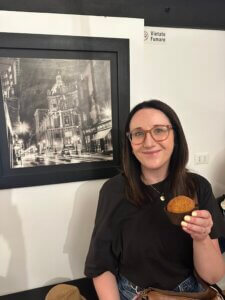
The group was small, with a few other couples, which made it feel relaxed and sociable. I enjoyed having the chance to ask questions and learn more about the different neighbourhoods we walked through. It was a nice mix of food, history, and atmosphere, and a good way to experience Palermo in the evening when the streets feel particularly lively.
Day trip to Cefalù
We took a day trip to Cefalù by train, which was very straightforward and took less than an hour. The trains were comfortable and reliable, and it made the whole journey feel easy — the kind of day trip you can do without much planning.
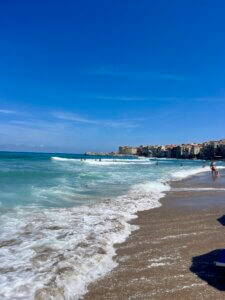
Cefalù itself is beautiful, especially the beach. We paid €30 for two sun loungers and a parasol, which felt very reasonable for such a stunning spot. It was a lovely way to spend the day: swimming, reading, and just enjoying the scenery. We picked up sandwiches from a nearby bakery and they were delicious — simple, fresh, and exactly what you want when you’re spending the day by the sea.
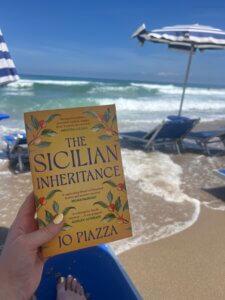
If you enjoy reading on holiday, I’d also recommend The Sicilian Inheritance by Jo Piazza. I loved this book, and it was a great way to learn more about Sicily’s history — especially the matriarchal culture that developed when many men left the island for America in the early 1900s. Reading it while I was in Sicily added a real richness to the trip and helped me understand the island on a deeper level.
Botanical gardens
The Botanic Gardens of Palermo were bigger and more organised than I expected, and they ended up being one of the most peaceful places I visited in Palermo. There is a huge range of plants from all over the world, including some really striking species that you don’t often see in European gardens. The ornate glasshouses are beautiful too and give the whole place a slightly old‑world, almost academic feel.

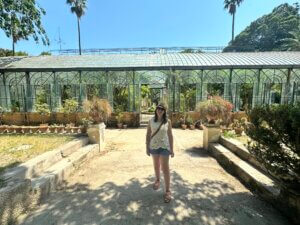
It’s a lovely spot for a quiet stroll, especially if you want a break from the energy of the historic centre. I found it surprisingly calming — the kind of place where you can slow down for an hour, wander without a plan, and enjoy a bit of stillness before heading back into the city.
Bars and restaurants
Trattoria Dal Pescatore
We had dinner at Trattoria Dal Pescatore and chose the tasting menu, which was a great way to try a range of Sicilian dishes. The food was amazing — fresh swordfish of course, but also pasta, risotto, oysters, mussels, and polpette di sarde (sardine balls), which were a real highlight. It felt like a proper celebration of local seafood and flavours.
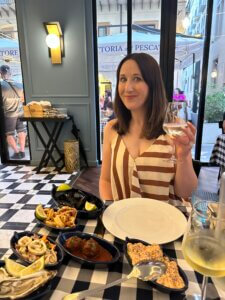
A slight caveat is that I wouldn’t describe the service as great, although it wasn’t awful either. It was more that it didn’t quite match the quality of the food. That said, I’m still glad we went, as the dishes themselves were absolutely worth it and made for a memorable evening.
Trattoria Pinsera Bar del Monte
We had our final lunch at Trattoria Pinsera Bar del Monte, and it ended up being one of my favourite meals of the trip. The service here was so warm and welcoming, which really stood out after a few days in the city. It had that relaxed, family‑run feel where nothing is rushed and everything comes with a smile.
The food was delicious too; simple, fresh dishes done really well. If I visited Palermo again, I would return here without question.
Café Central
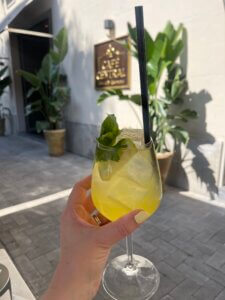
My favourite place for a spritz in Palermo was Café Central at Piazza Teatro. It’s a lovely spot to sit outside and take in the atmosphere, especially in the early evening when the square starts to come alive. If you go at aperitivo time they bring out delicious snacks, which makes it an ideal place to pause after a day of exploring and watch the city settle into the evening.
Is Palermo worth visiting?
If you’ve read this far, you’ve probably gathered that my take on Palermo is quite similar to how I feel about Naples. It is absolutely worth visiting — but it’s important to know what to expect. Palermo is very much a lived‑in city. It can be a bit rough around the edges, and you will see bins, litter, and the general messiness that comes with real life happening all around you.
For me, this didn’t take away from the experience at all. In fact, it’s part of what gives Palermo its energy and character. But if you’re looking for somewhere polished, pristine, or conventionally “pretty,” this probably isn’t the right choice. If you want a romantic, picture‑perfect break, you might prefer somewhere like Rome or Florence.
What Palermo does offer is something far more interesting: incredible food, fascinating history, lively markets, and the feeling of being in a place that’s very much alive. Add in the beaches less than an hour away and the ease of day trips like Cefalù, and it becomes a really rewarding city break — as long as you go with the right expectations.
Where to stay in Palermo
We stayed at L’Opera Buffa B&B, which was in a really convenient location near the Teatro. It was comfortable and clean, and the staff were friendly, which made it a great base for exploring the city. It also worked particularly well for us because we had late flights — we were able to enter via a code and leave our bags there after check‑out, so there was no need to find a luggage locker, which is often the case with late departures.
A small caveat is that the breakfast was quite basic, although the coffee was good. Breakfast is served from 7.30am right outside the rooms, so it can be a little noisy. It’s not somewhere I’d stay if you want to sleep in, but for a short city break where convenience matters, it was a really solid choice.
When to visit Palermo for a city break
For the best weather, I’d recommend visiting Palermo in April or May, or in September or October. These months offer warm, sunny days without the intense heat of midsummer, and they’re ideal for exploring the historic centre, visiting the markets, and taking day trips to the beach.
I visited in June and it was already beginning to get very hot — not unmanageable, but definitely something to be aware of if you prefer milder temperatures or plan to do a lot of walking. The shoulder seasons give you the same atmosphere and energy, just with a bit more comfort.
How long to stay
We stayed for three nights in Palermo and found this to be enough time to explore the historic centre, visit the markets, enjoy some great food, and take a day trip to Cefalù. It felt like a good balance — long enough to get a feel for the city without rushing.
If you want to stay longer, there is so much more to explore in Sicily. Palermo works well as a base for a wider trip, with easy access to beaches, nearby towns, and other parts of the island. For a longer break, you could easily spend a week or more discovering different regions and still have plenty left for a future visit.
Last but not least…
- If you’re feeling hedonistic.. try some Sicilian granita. It’s one of the island’s most iconic treats — somewhere between a sorbet and a slush, but smoother, silkier, and far more indulgent. Traditionally it’s made with just fruit, sugar, and water, churned slowly until it reaches that perfect, velvety texture. You’ll find classic flavours like lemon, almond, and strawberry, but there are also richer versions such as pistachio or coffee. In Sicily it’s often eaten for breakfast with a soft brioche bun, which sounds unusual until you try it — the combination is unexpectedly comforting, especially on a warm morning.
- If you want a sense of accomplishment.. order something new. Trying a dish you’ve never had before — like pane ca’ meusa (the spleen sandwich) or polpette di sarde — is a tiny act of bravery that leaves you feeling quietly proud of yourself.
- Reasons to be optimistic.. One of the things that makes Palermo feel unexpectedly hopeful is its long history of absorbing change and continuing to reinvent itself. This is a city that has been shaped by so many cultures — Arab, Norman, Spanish, Italian — and instead of losing itself, it has learned to hold all of those influences at once. The architecture, the food, the language, even the rhythm of daily life all carry traces of that layered past.There’s something quietly optimistic in that: the idea that a place can go through centuries of upheaval and still emerge with a strong sense of identity. Palermo shows that complexity doesn’t have to be something to fear, it can be something to build from. The city’s ability to adapt, absorb, and continue feels like a reminder that resilience isn’t always loud or dramatic; sometimes it’s simply the steady, ongoing act of carrying your history forward while still making space for what comes next.